
Soft variegation, easy growth, and a forgiving nature — an ideal entry into statement variegated foliage.
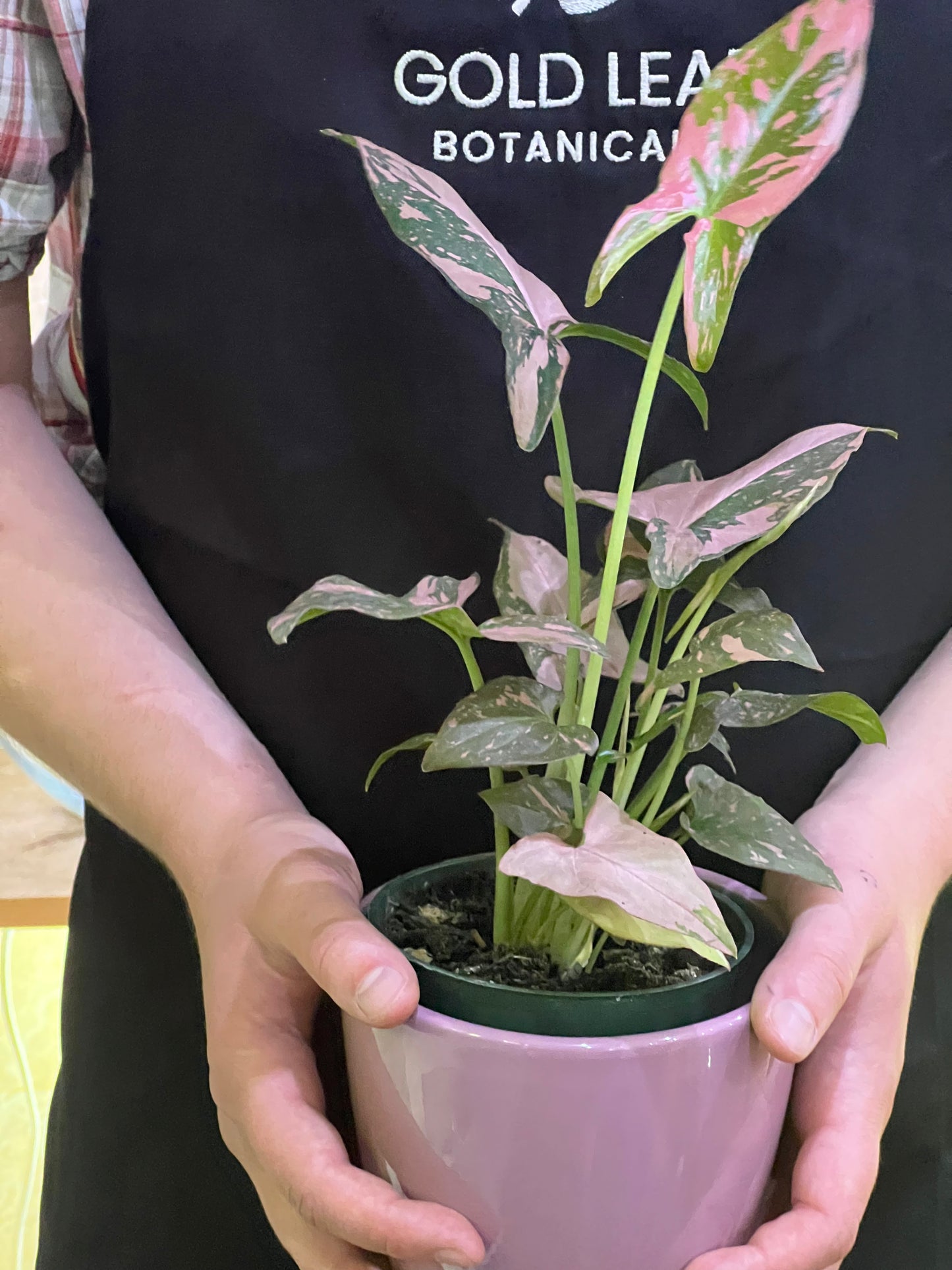
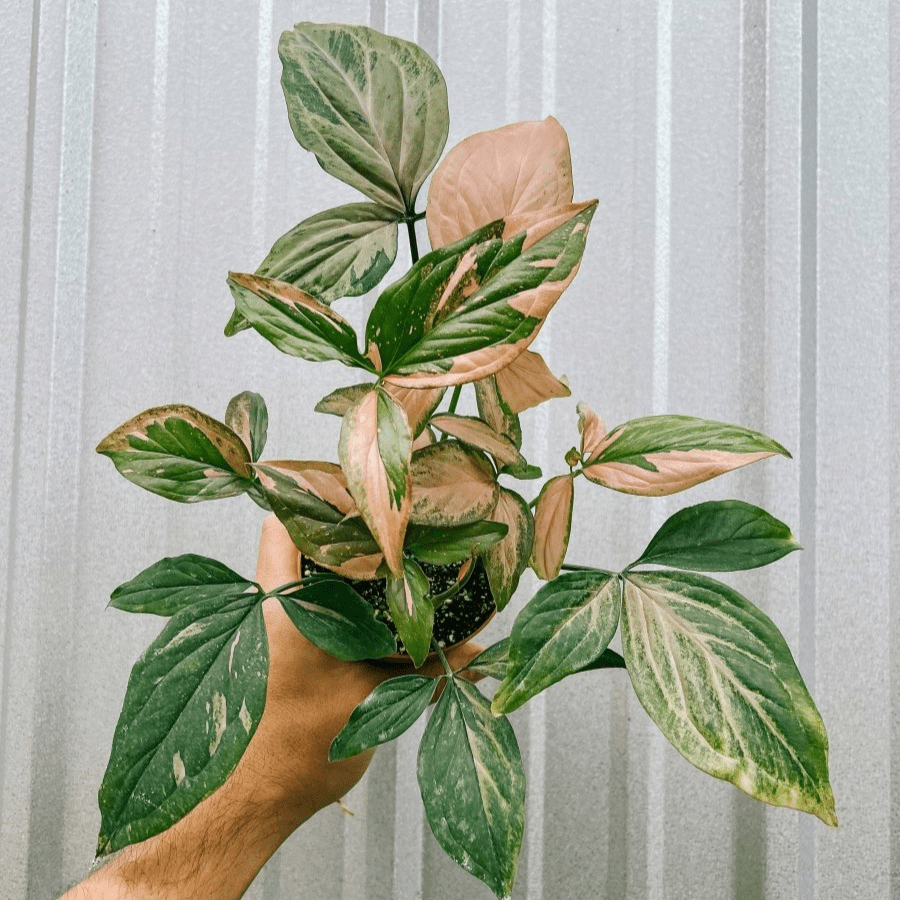
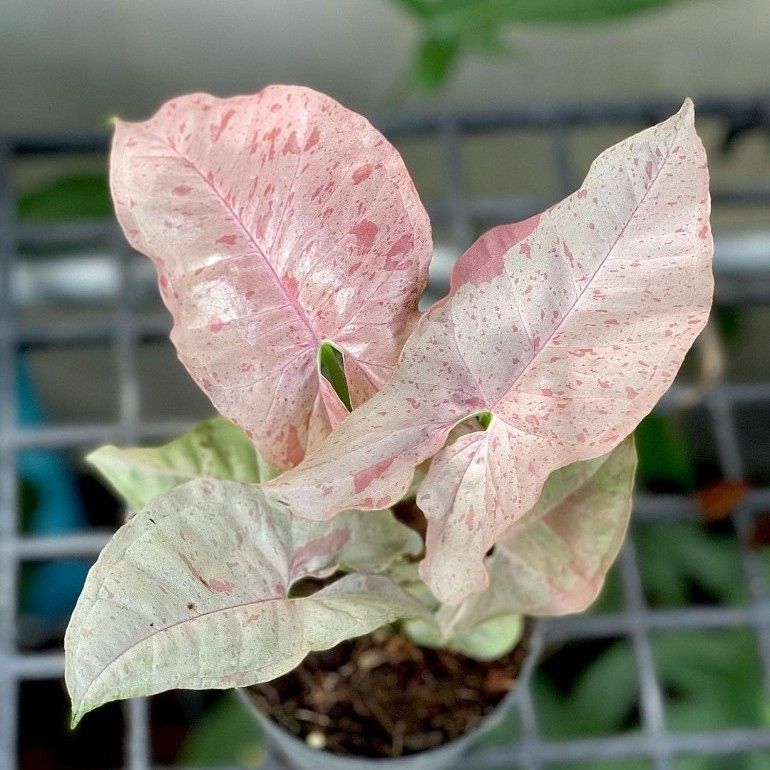
The Syngonium ‘Pink Splash’ is one of the most loved variegated Syngoniums because it combines two things collectors rarely find together: beautiful pastel variegation and remarkably easy care. With splashes of blush pink across arrow-shaped leaves, it offers the aesthetic appeal of a rare variegated plant without the difficulty or sensitivity that comes with many high-variegation species.
This guide breaks down everything beginners need to know to keep a Syngonium Pink Splash thriving, stable, and growing with confidence.
Why It’s Great for Beginners
Syngonium, in general, are extremely adaptable. The Pink Splash shares that same resilience, even with its softer variegation pattern.
Beginner Advantages
– Tolerant of a wide range of light conditions
– Quick to root and recover from stress
– Forgiving with watering mistakes
– Pest-resistant compared to more delicate aroids
– Holds variegation well under proper lighting
– Easy to prune and shape
This cultivar strikes the perfect balance between ornamental beauty and low-effort care — ideal for anyone wanting their first “pretty” variegated plant.
Light Requirements
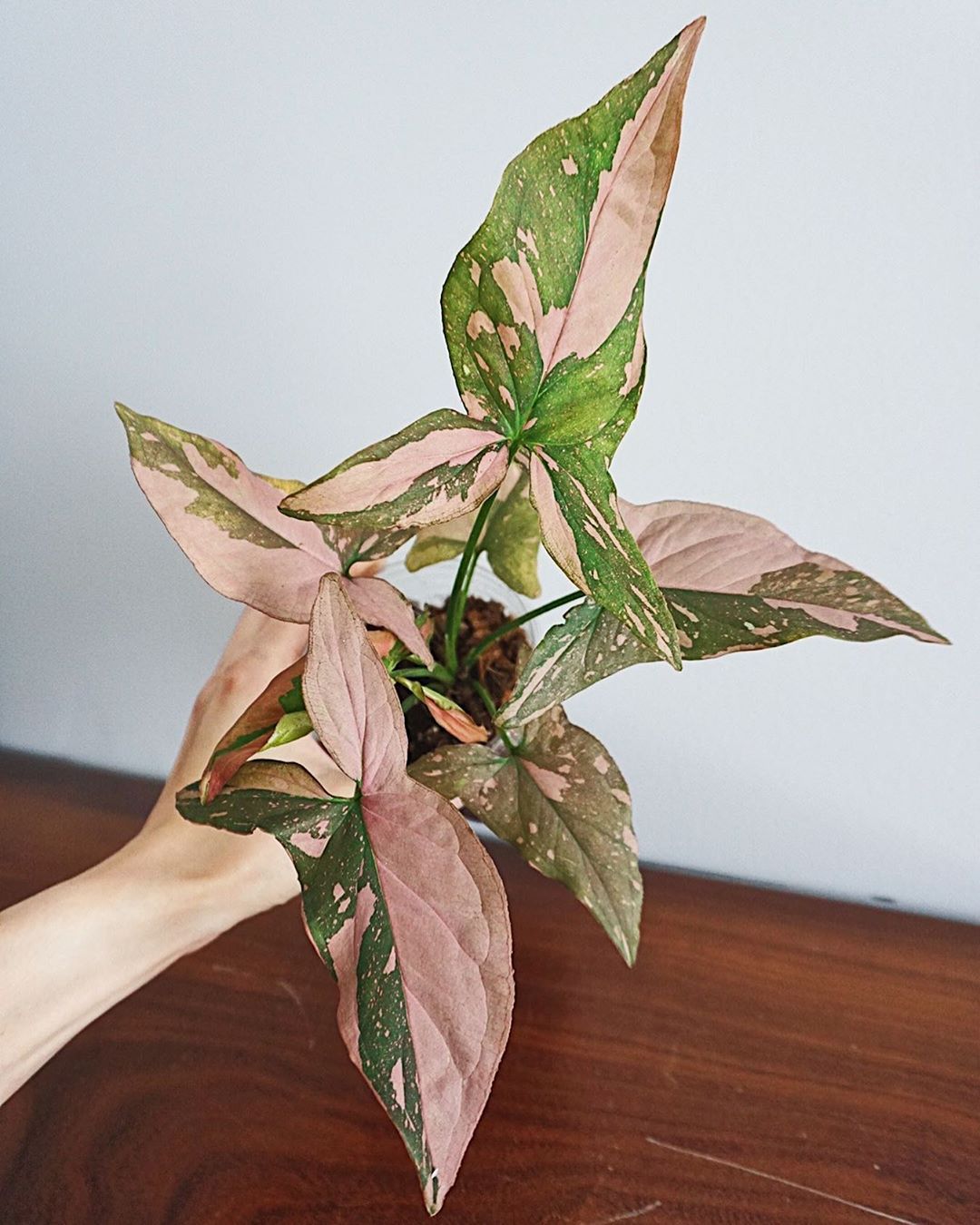
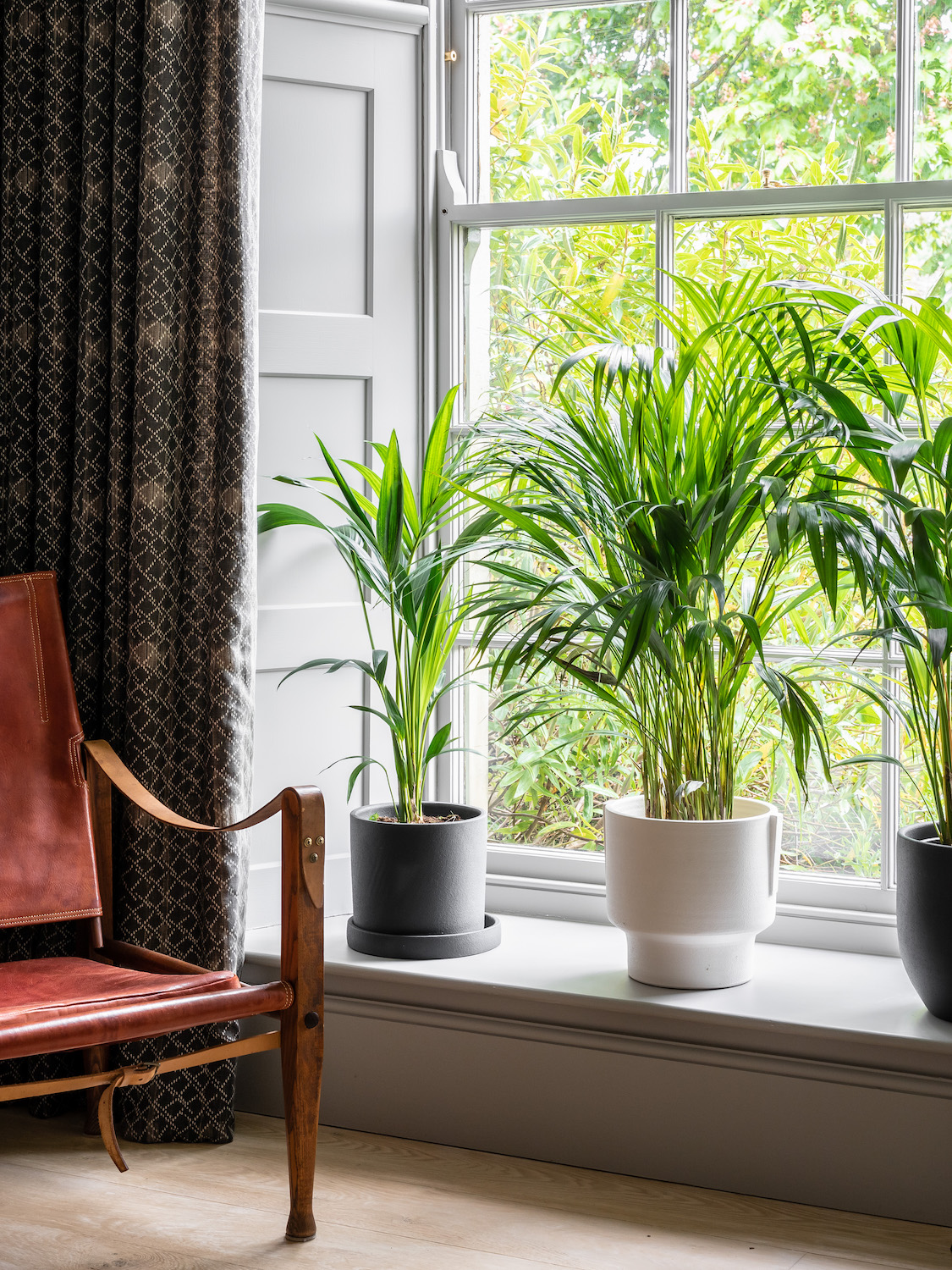

Light is the main factor influencing variegation intensity and splash pattern.
Ideal Light
– Bright, indirect light
– A sheer-filtered window
– A grow light positioned at a medium distance
Too Little Light
– Variegation fades
– Growth becomes leggy
– Leaves shrink in size
Too Much Light
– Pink patches can bleach to white
– Leaves can crisp around edges
– Variegation becomes patchy
Aim for gentle brightness — similar to what a Philodendron or pothos would enjoy, but slightly stronger to maintain colour vibrancy.
Watering Needs
Syngonium are naturally moisture-loving, but the Pink Splash prefers a gentle rhythm that avoids extremes.
Watering Guide
– Allow the top 30–40% of the soil to dry between waterings
– Water thoroughly until the pot drains
– Empty the drainage tray after watering
– Reduce watering during winter slowdown
Signs of Overwatering
– Yellow lower leaves
– Limp but soft foliage
– Soil smelling sour
Signs of Underwatering
– Pale, papery leaves
– Crisp tips
– Foliage curling inward
The plant recovers quickly from underwatering but struggles more with long-term sogginess, so keep the mix airy and breathable.
Humidity & Temperature

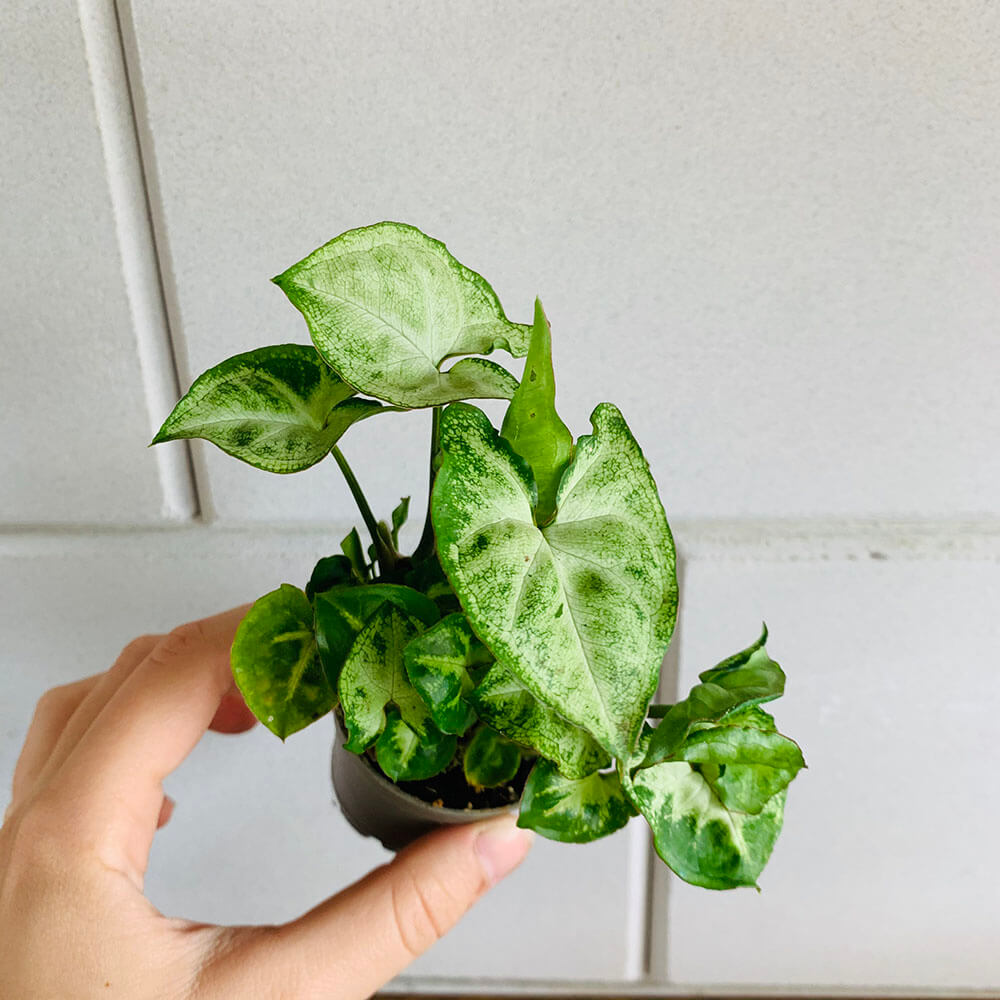

The Pink Splash thrives with moderate humidity but does not require tropical greenhouse conditions.
Humidity Range
– Ideal: 55–70%
– Acceptable: 45–50%
– Avoid drops below 35% for extended periods
Temperature Range
– Best: 20–27°C
– Minimum: 15°C
– Avoid cold drafts from doors and windows
Syngoniums handle normal household conditions well — you’ll see the best pink coloration when humidity and warmth are stable.
Soil & Potting Mix
Syngonium roots love a mix that holds moisture but drains freely.
Recommended Mix
– 40% premium aroid soil
– 30% perlite
– 20% coco coir
– 10% bark or pumice
Repotting Frequency
– Every 12–18 months
– When roots circle the pot or soil becomes compact
Pink Splash grows quickly, so repot slightly earlier if you want fuller, bushier growth.
Growth Pattern & Trimming

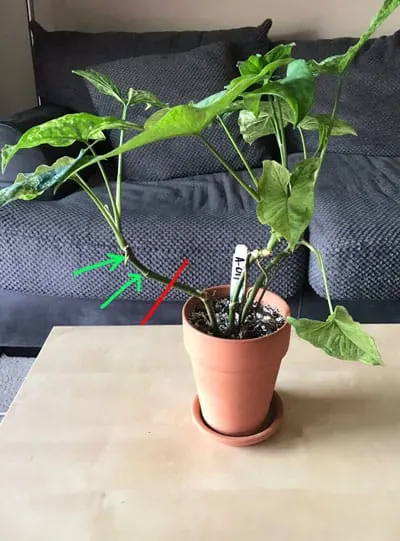
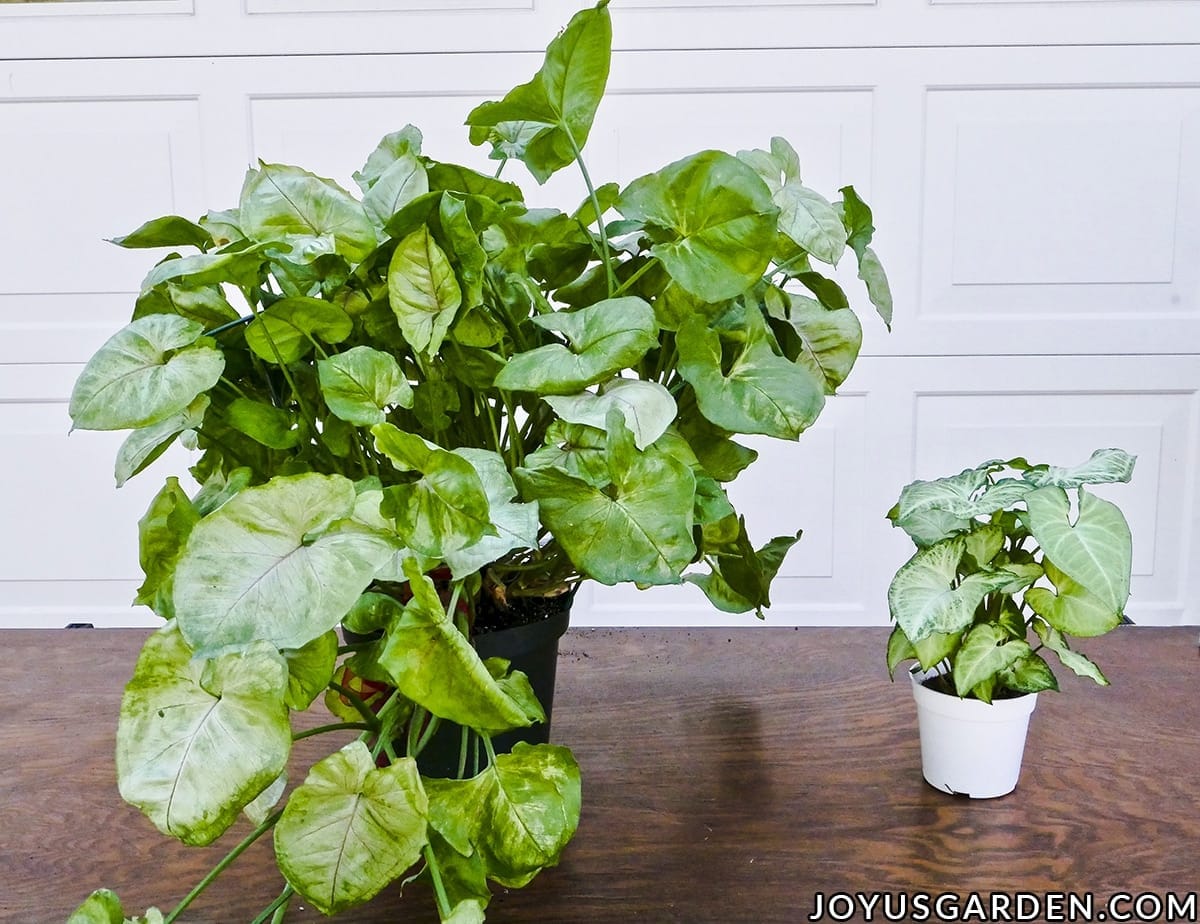
Syngonium Pink Splash begins compact but becomes a vine with age. You can control its shape by trimming.
To Keep It Bushy
– Pinch off new growth tips occasionally
– Encourage side shoots
– Rotate the pot weekly for even growth
To Grow It as a Vine
– Allow stems to elongate naturally
– Provide a moss pole or support
– Expect larger leaves with maturity
Pruning Benefits
– Increases variegation distribution
– Encourages fuller growth
– Helps manage legginess in low light
Cuttings root easily in water, perlite, moss, or soil — making this plant great for beginners wanting to try propagation.
Variegation Behaviour
Variegation in Pink Splash is splattered, soft, and typically stable — but it still responds to environmental factors.
Stable Variegation Signs
– Consistent pink marks on multiple leaves
– New leaves opening with similar patterns
– Pink tones maintaining depth without bleaching
When Variegation Fades
– Lighting too low
– Nutrient imbalance
– Cold temperatures slowing chlorophyll production
When Variegation Bleaches
– Intense direct sun
– Grow light too close
Pink Splash variegation is expressive rather than predictable — each leaf is a small artwork. Consistency comes from consistent care.
Feeding & Fertiliser
A balanced feeding routine supports healthy variegation and steady leaf size.
Beginner Fertilising Plan
– Use a gentle, balanced liquid fertiliser
– Apply every 3–4 weeks during active growth
– Reduce feeding in winter
– Avoid high-nitrogen formulas which darken green areas
Variegated plants need slightly more micronutrients because they have fewer green cells to create energy.
Common Issues & How to Fix Them
1. Crispy Pink Patches
– Caused by low humidity or strong light
– Move plant slightly away from direct rays
– Increase ambient humidity
2. Leggy Growth
– Caused by insufficient light
– Move plant to a brighter location
– Prune to encourage branching
3. Pests (rare but possible)
Pink Splash is less prone than many aroids, but look out for:
– Spider mites
– Thrips
– Fungus gnats
Treat early with gentle insecticidal soap or neem.
4. Yellow Lower Leaves
– Overwatering or old-age leaf cycling
– Check root health and soil moisture pattern
Most leaf problems come from uneven watering or low light — both easily corrected.
Why Collectors Love the Pink Splash
– Easy, forgiving, and fast-growing
– Aesthetic pink variegation without the fuss
– Great as a first variegated plant
– Perfect for desks, shelves, or larger plant displays
– Responds beautifully to pruning and propagation
For many collectors, Pink Splash becomes a sentimental favourite — the plant that sparked their love of variegated foliage.
Collector Notes
Syngonium Pink Splash is the perfect introduction to variegated houseplants: soft colours, steady growth, and manageable care. With even light, gentle watering, and moderate humidity, it will reward you with leaf after leaf of playful pink splashes.
For beginners building confidence, this plant is a companion that teaches the basics without punishing mistakes.