
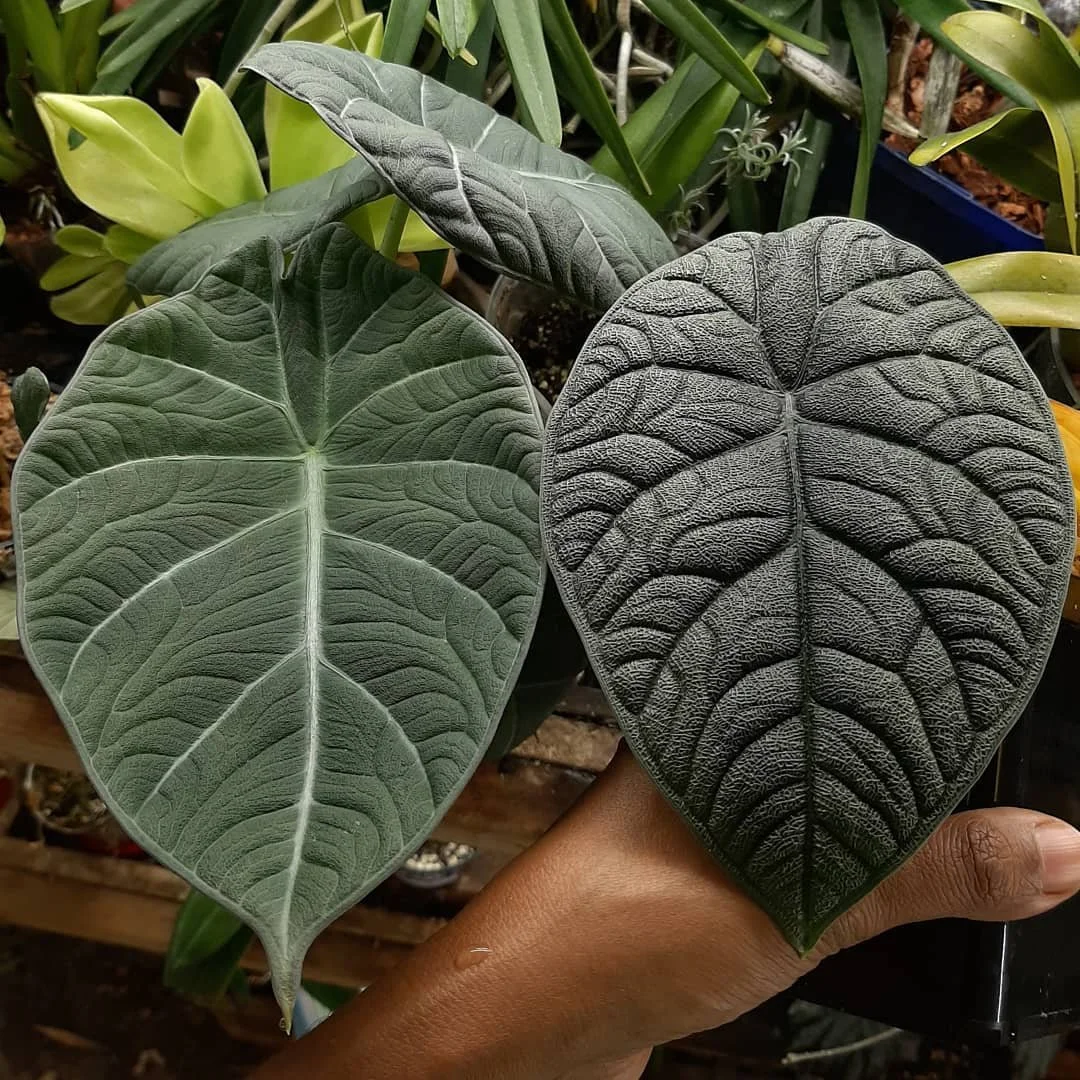

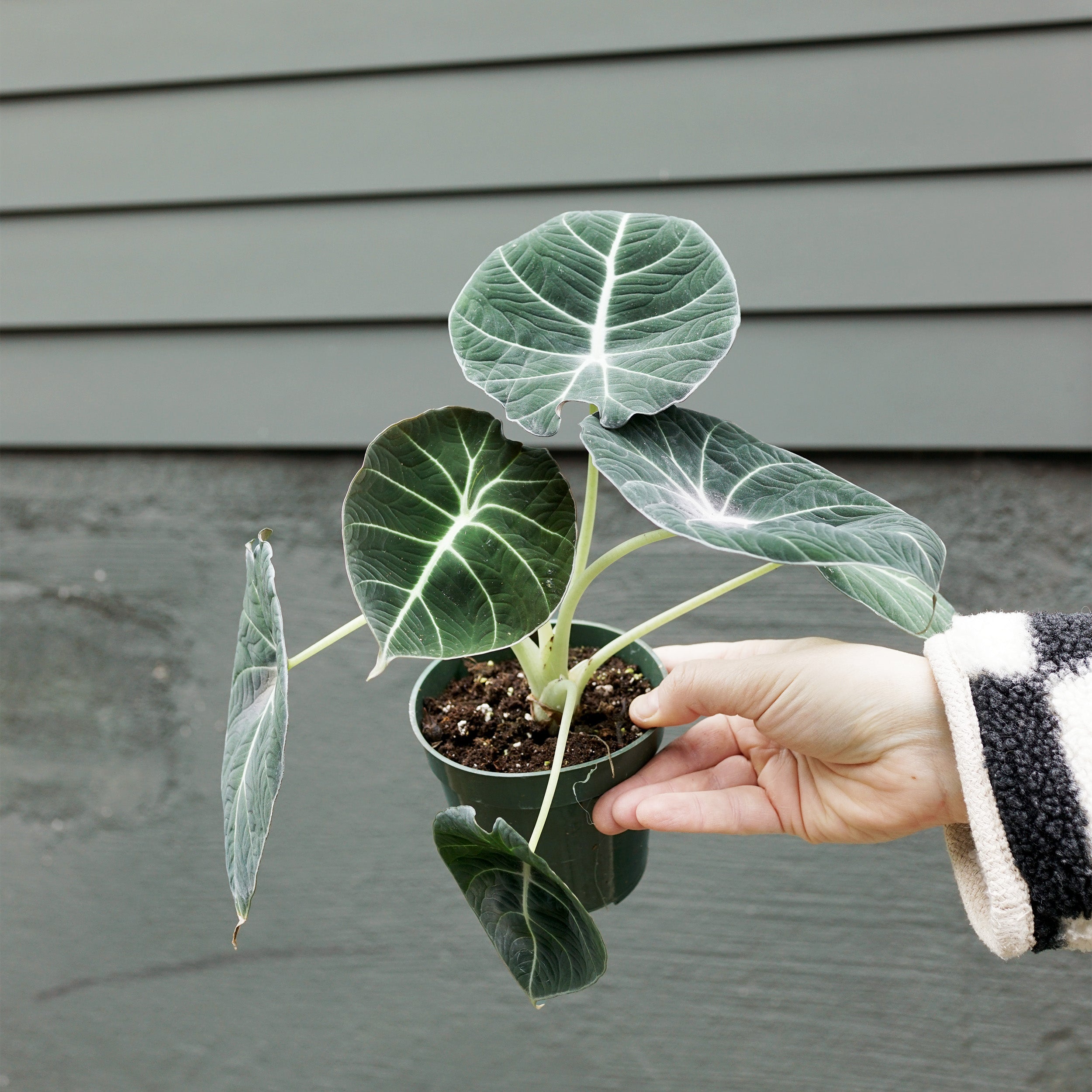
Alocasia Maharani and Alocasia Reginula (‘Black Velvet’) are two of the most recognisable jewel Alocasias—and two species that new collectors frequently confuse. Both are compact, both have thick textured foliage, and both display a dramatic, high-contrast appearance that makes them favourites on plant shelves. But despite their similarities, they are not interchangeable.
These plants differ in origins, behaviour, texture, colour, and care requirements. Understanding these differences makes it far easier to keep both thriving—especially since jewel Alocasias can be sensitive to watering, humidity, and seasonal changes.
This guide breaks down everything that makes the Maharani and the Black Velvet distinct, from leaf structure and growth patterns to dormancy behaviour and soil preferences.
Origins & Background
Alocasia Reginula (‘Black Velvet’)
– Native to Borneo
– Known for extremely dark, velvety leaves with silver veins
– Name translates to “Little Queen,” referencing its petite and elegant form
– Part of the classic “jewel Alocasia” group known for compact growth and high aesthetic appeal
Alocasia Maharani
– A hybrid between Alocasia Reginula (Black Velvet) and Alocasia Melo
– Combines the velvet look of Reginula with the thick, sculpted texture of Melo
– Introduced through cultivation rather than found in the wild
– Exhibits superior durability and resilience compared to most jewels
In simple terms:
Reginula is the dark, velvety original.
Maharani is the sculpted, leathery hybrid built for durability.
Leaf Texture & Colour (The Most Noticeable Difference)


Black Velvet (Reginula)
– Deep charcoal to near-black leaves
– Soft, velvety surface with a matte finish
– Silver-white veins that stand out dramatically against dark foliage
– Thin-to-medium leaf thickness
The Black Velvet is one of the darkest foliage plants available. Under bright indirect light, it almost appears suede-like.
Maharani
– Slate-grey to smoky green leaves
– Thick, rigid, leathery texture
– Raised vein structures that feel sculpted
– More subtle contrast than Black Velvet
Where Reginula is velvet-soft and dramatic, Maharani feels almost stone-like—rigid, textured, and architectural.
Growth Habit & Size
Black Velvet
– Compact and low-growing
– Leaves typically 10–15 cm
– Slow but steady grower
– More prone to leaf drop if conditions fluctuate
Black Velvet stays small and elegant, making it perfect for shelves, desks, and terrariums (if humidity and airflow are controlled).
Maharani
– Similar footprint but slightly larger overall
– Leaves thicker, rounder, and more robust
– Better tolerance for varying indoor environments
– Often maintains more leaves at a time compared to Reginula
Maharani grows slower than many common Alocasias, but tends to hold its foliage better once established.
Light Requirements
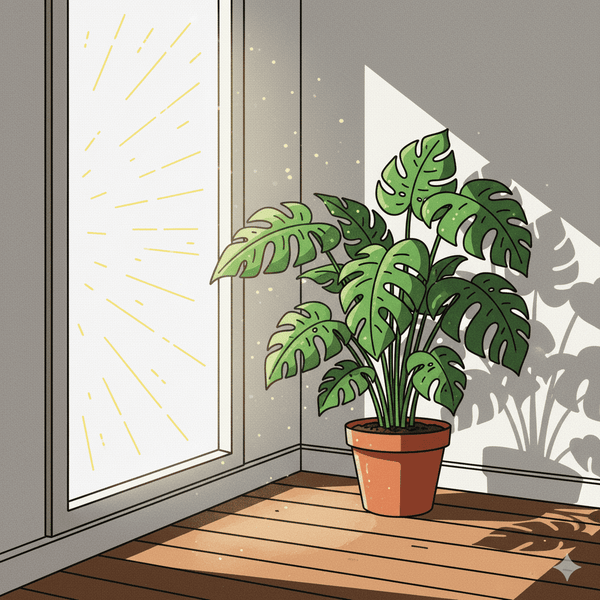
Both species thrive under bright, indirect light, but their tolerance differs.
Black Velvet
– Highly sensitive to strong light
– Requires softer filtered light
– Excess brightness washes out leaf colour and causes burn
Best placement:
– 1–2 metres away from a bright window
– Near east-facing light
– Behind sheer curtains
Maharani
– Slightly more tolerant of brighter light
– Still requires protection from direct sun
– Can handle slightly higher intensity without fading
Best placement:
– Bright rooms with indirect light
– North-facing windows (AU)
– Under gentle grow lights at distance
In summary:
Black Velvet = gentler light.
Maharani = moderate bright indirect light.
Watering Needs
Both are jewels, meaning they prefer consistent moisture with strong aeration—but there are key differences.
Black Velvet
– More sensitive to overwatering
– More susceptible to root rot if soil stays wet
– Prefers to dry out slightly between waterings
The rule of thumb:
– Let the top 40–50% of soil dry
– Water evenly
– Ensure excellent drainage
Maharani
– More forgiving
– Tolerates slightly more moisture due to thicker leaves
– Less prone to collapsing from mild irregularities
The hybrid genetics give Maharani better resilience, making it a good choice for new jewel keepers.
Humidity & Temperature
Black Velvet
– Prefers 55–70% humidity
– Leaves crisp at the edges if air is too dry
– Very sensitive to cold air (under 18°C)
– Can enter dormancy easily during winter
Maharani
– Comfortable at 45–65%
– More tolerant of ambient household humidity
– Less prone to dramatic seasonal dormancy
Both plants grow best at 20–27°C.
If your home gets dry in winter, Black Velvet typically shows stress first, while Maharani remains stable longer.
Soil Requirements
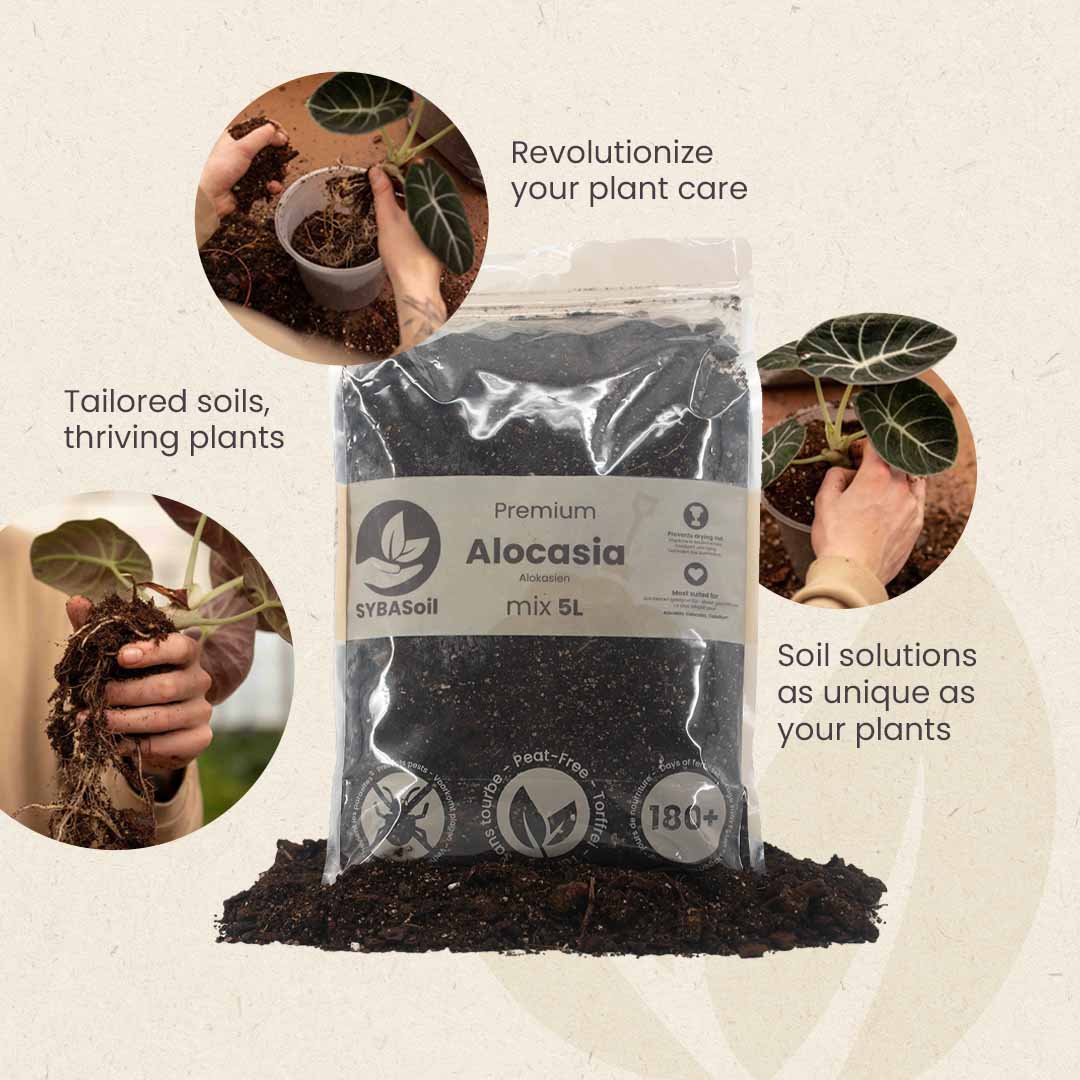

Both require well-aerated mixes, but Maharani accepts a slightly heavier substrate.
Recommended Mix for Black Velvet
– 40% coco coir
– 30% fine bark
– 20% perlite or pumice
– 10% charcoal
The focus:
– Maximum air around roots
– Fast drainage
– Light texture
Recommended Mix for Maharani
– 35–40% coco coir
– 25–30% bark
– 20–25% pumice/perlite
– 5–10% charcoal
Maharani’s thicker leaves and hybrid vigour allow for moderately slower-drying soil compared to Reginula.
Dormancy Differences
Dormancy is a major point of confusion for Alocasia owners.
Black Velvet Dormancy Patterns
– More prone to dramatic leaf drop
– Can retreat to one leaf or none
– Responds strongly to seasonal changes
– Requires very careful watering during dormancy
Collectors often panic when Reginula drops all its leaves, but this is normal if the corm remains firm.
Maharani Dormancy Patterns
– Far less dramatic
– Often keeps at least 1–3 leaves
– Slows growth rather than shutting down
– Easier to maintain during winter
If you're new to Alocasia or uncomfortable with dramatic seasonal behaviour, Maharani offers a calmer experience.
Common Issues & How Each Plant Responds
Overwatering
– Black Velvet: very sensitive
– Maharani: tolerates mild errors better
Underwatering
– Black Velvet: droops and recovers slowly
– Maharani: recovers quickly due to thicker foliage
Pests
Both can get spider mites and thrips, but:
– Black Velvet is more prone in dry conditions
– Maharani’s thicker leaves offer more natural resistance
Light Stress
– Black Velvet fades or burns easily
– Maharani shows subtle paling rather than crisping
Which One Is Easier to Grow?
Maharani wins for most beginners due to:
– Thicker, more resilient leaves
– Better tolerance for inconsistent watering
– Lower sensitivity to light fluctuations
– Less dramatic dormancy behaviour
Black Velvet, however, remains the aesthetic queen—if you can provide stable light, humidity, and watering, it rewards you with unmatched visual impact.
Which One Should You Choose?
Choose Black Velvet if:
– You love deep, velvety foliage
– You enjoy compact, elegant plants
– You can provide consistent humidity
– You want a visually dramatic species
Choose Maharani if:
– You want an easier jewel Alocasia
– You’re new to rare Alocasias
– You prefer thicker, sculpted foliage
– You want a plant that stays stable year-round
Choose Both if:
– You love contrasting textures
– You want a side-by-side display
– You enjoy collecting jewel species
– You want a resilient plant (Maharani) and a statement plant (Reginula)
Final Thoughts
Alocasia Maharani and Alocasia Reginula share the same rare-plant charm, but they shine in different ways. Reginula delivers velvety darkness and crisp silver veins—aesthetic perfection when conditions are right. Maharani offers durability, sculptural structure, and hybrid strength suited for everyday indoor growers.
Together, they make a stunning duo in any collection:
one the elegant queen, the other the armoured warrior.