
A clear, beginner-friendly guide to understanding how your Alocasia grows, rests, and renews itself — so you know exactly what to expect all year long.
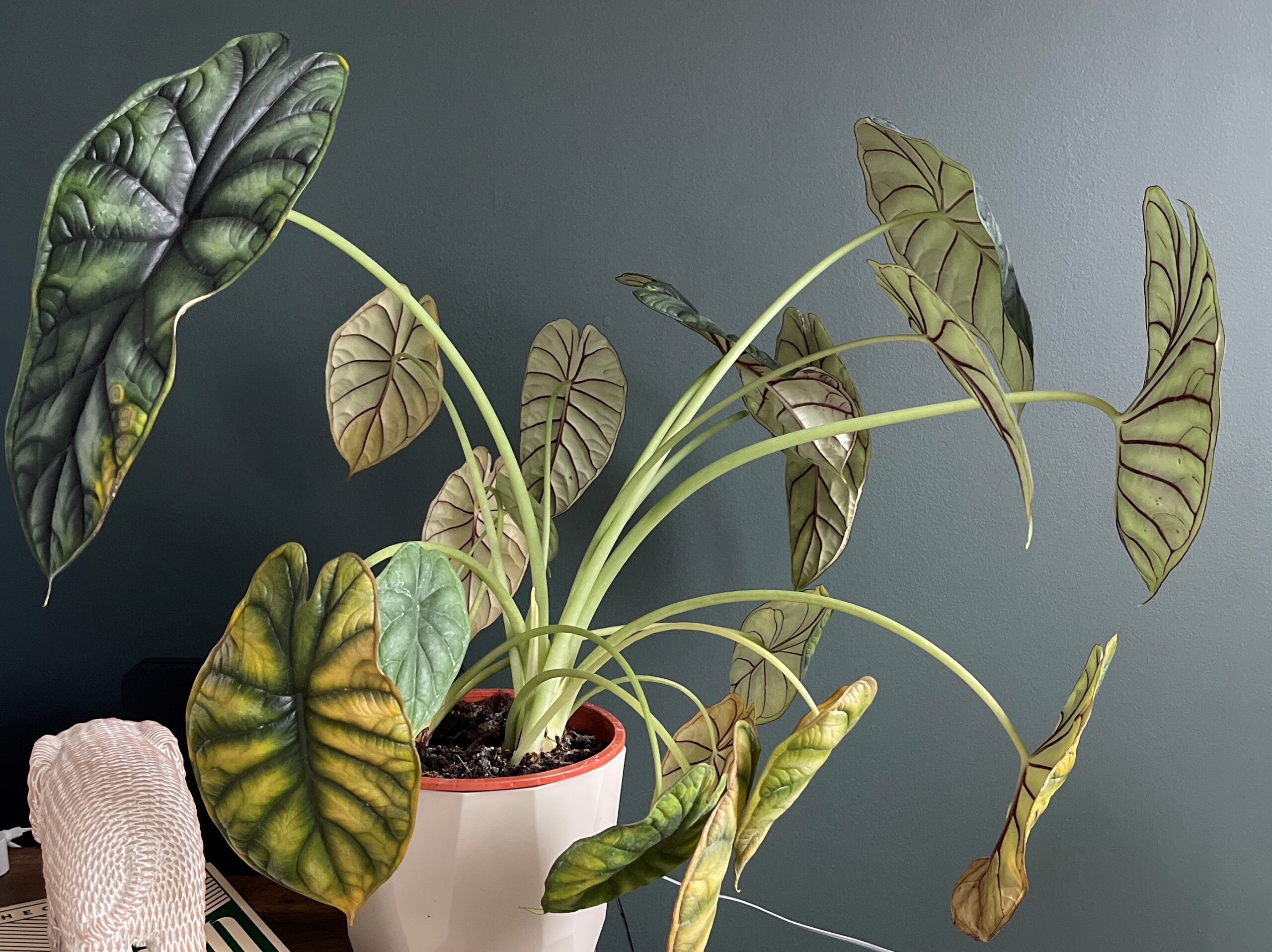

Alocasia often get labelled as “dramatic” or “unpredictable,” but the truth is far simpler: they follow a very natural, very predictable growth cycle that mirrors the tropical climates they come from. Once you understand this lifecycle, everything makes more sense — the leaf drops, the sudden growth spurts, why a plant that looked “dead” two months ago suddenly wakes up again.
This guide breaks the lifecycle down in a way beginners can easily follow. Use it to understand what your plant is doing, why it’s doing it, and what it needs during each phase.
Why Understanding the Lifecycle Matters
Alocasia don’t behave like common houseplants. They aren’t evergreen in the same way pothos or philodendrons are. Instead, they operate like energy managers, storing, spending, slowing down, and rebuilding depending on the season, the light, and the resources around them.
Knowing the lifecycle helps you:
– Avoid overwatering during slow periods
– Identify normal leaf loss vs. actual decline
– Understand when to repot and when to leave the plant alone
– Increase your chances of healthy new growth, offsets, and corms
– Reduce stress by recognising what’s normal behaviour
If you’ve ever wondered why your Alocasia suddenly drops leaves in winter, or why a small plant pushes out a giant leaf out of nowhere, the lifecycle explains it all.
The Four Stages of an Alocasia’s Lifecycle
1. Energy Storage (The Silent Foundation)
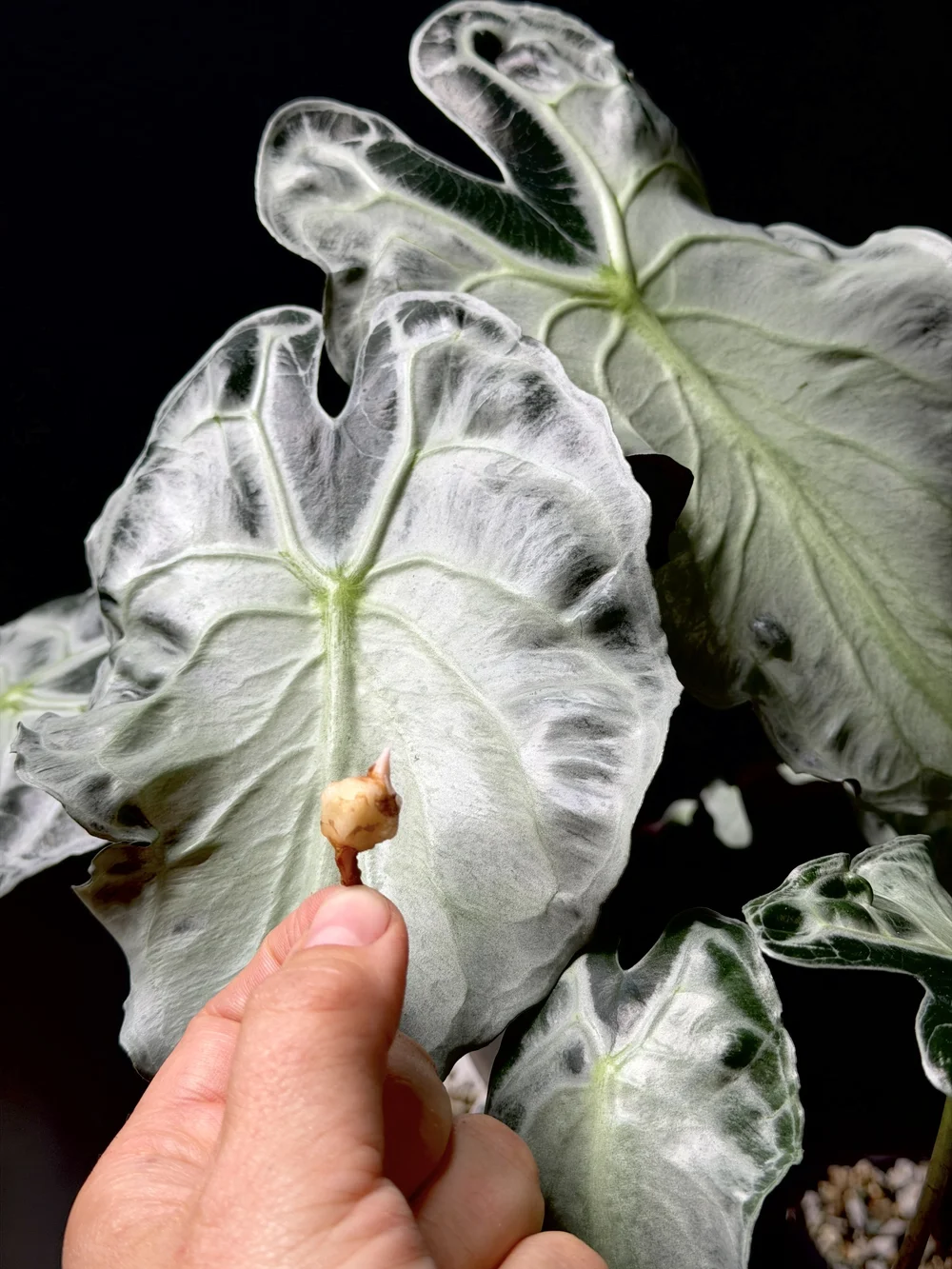
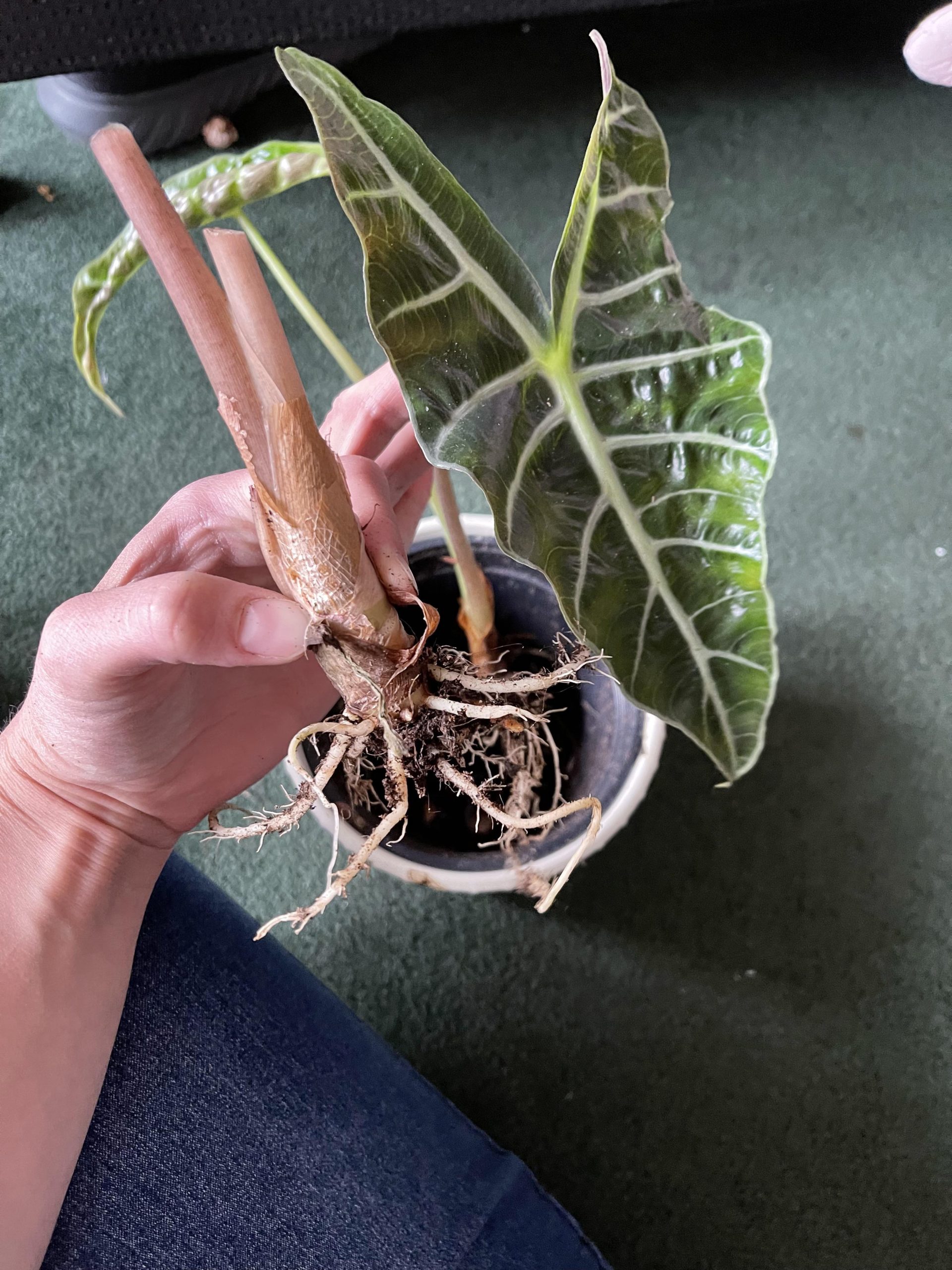

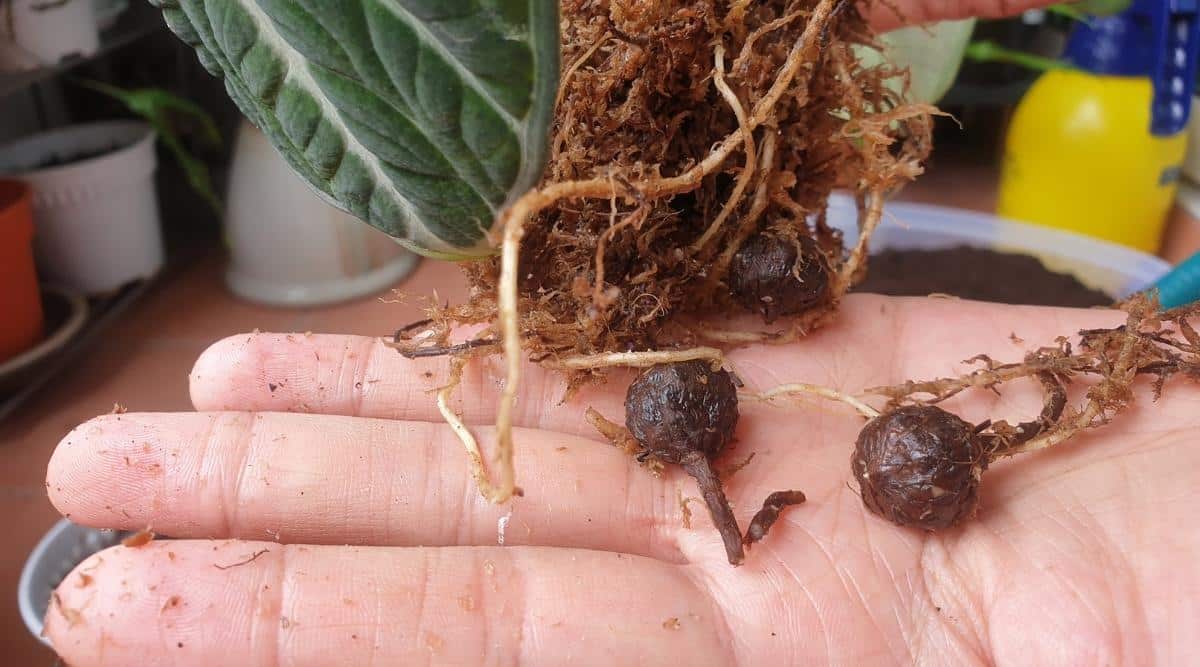
Before Alocasia produce big, showy leaves, they invest heavily in what you can’t see: their corm and roots.
This is the foundation of your plant’s strength.
What happens in this phase
– The plant directs energy downward into the corm.
– Old or smaller leaves may yellow to redirect nutrients.
– Root systems expand, thicken, and branch out.
– Visible growth may slow even though activity underground increases.
This can happen at any time of year, but it’s especially common after:
– Repotting
– Root pruning
– A leaf unfurls
– Stress (overwatering, underwatering, pests)
– Seasonal light changes
How to support the plant
– Maintain even moisture (not wet, not bone dry).
– Avoid fertiliser until new growth appears.
– Keep humidity stable.
– Don’t disturb the root system.
Collector Tip
A thriving corm = an Alocasia that survives anything.
Even if all leaves die back, a living corm will almost always regrow.
2. Active Growth (Peak Season)

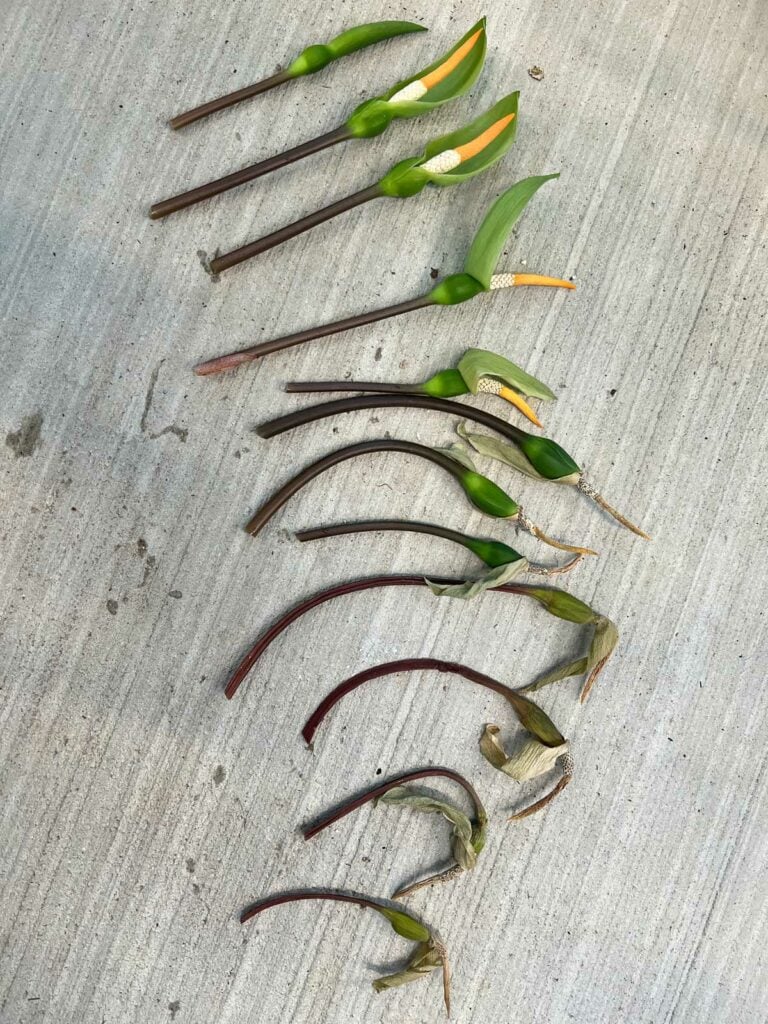
This is the period most collectors look forward to — when the plant wakes up fully and produces new leaves, larger foliage, and sometimes offsets.
What happens in this phase
– Leaves unfurl more quickly (7–21 days).
– Size increases with each new leaf.
– Soil dries faster due to higher water uptake.
– New roots push into fresh substrate.
– Plants may produce baby offsets or new corms around the base.
Signs your Alocasia is in growth mode
– Petioles look firm and upright.
– You see a “spear” forming at the crown.
– Leaves feel thicker and more hydrated.
– Growth is steady and consistent week to week.
How to support the plant
– Increase watering frequency — but let soil dry 40–50% between cycles.
– Use a gentle fertiliser once every 2–4 weeks.
– Raise humidity to 55–70% if possible.
– Give bright, filtered light (the single biggest factor for leaf size).
Common misconceptions
“My Alocasia stopped growing — what’s wrong?”
Often nothing. They grow in waves. One big leaf may take weeks of energy to prepare before you see movement again.
3. Seasonal Slowdown (Autumn–Early Winter)
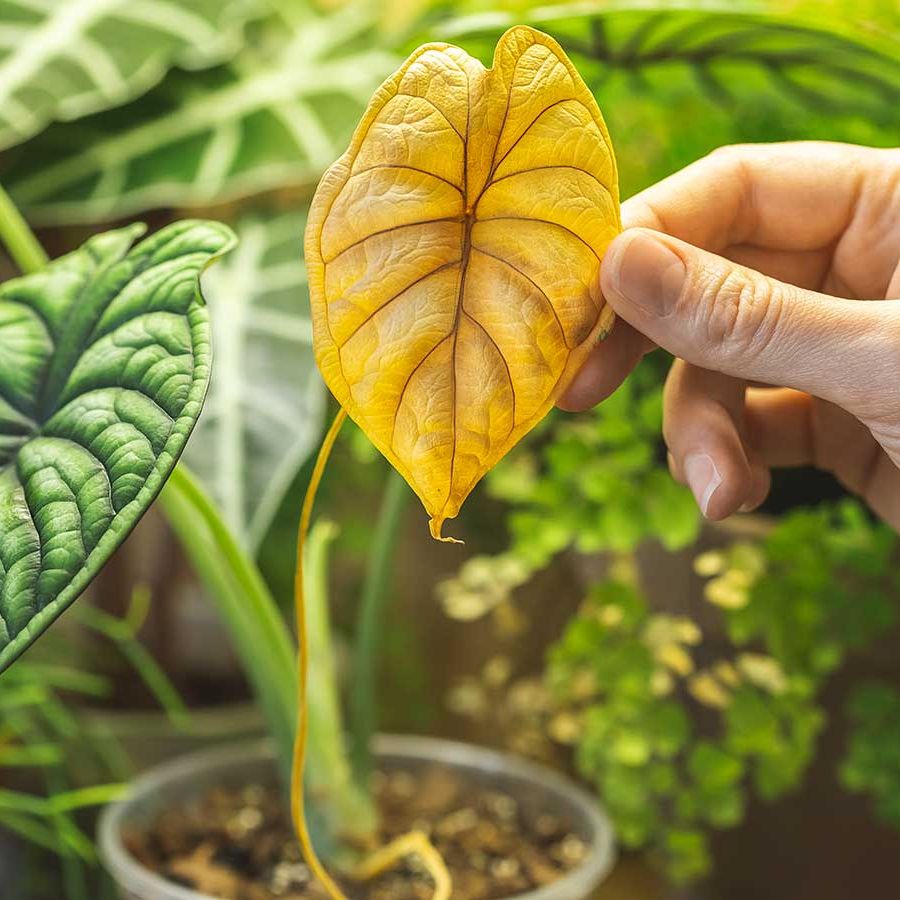
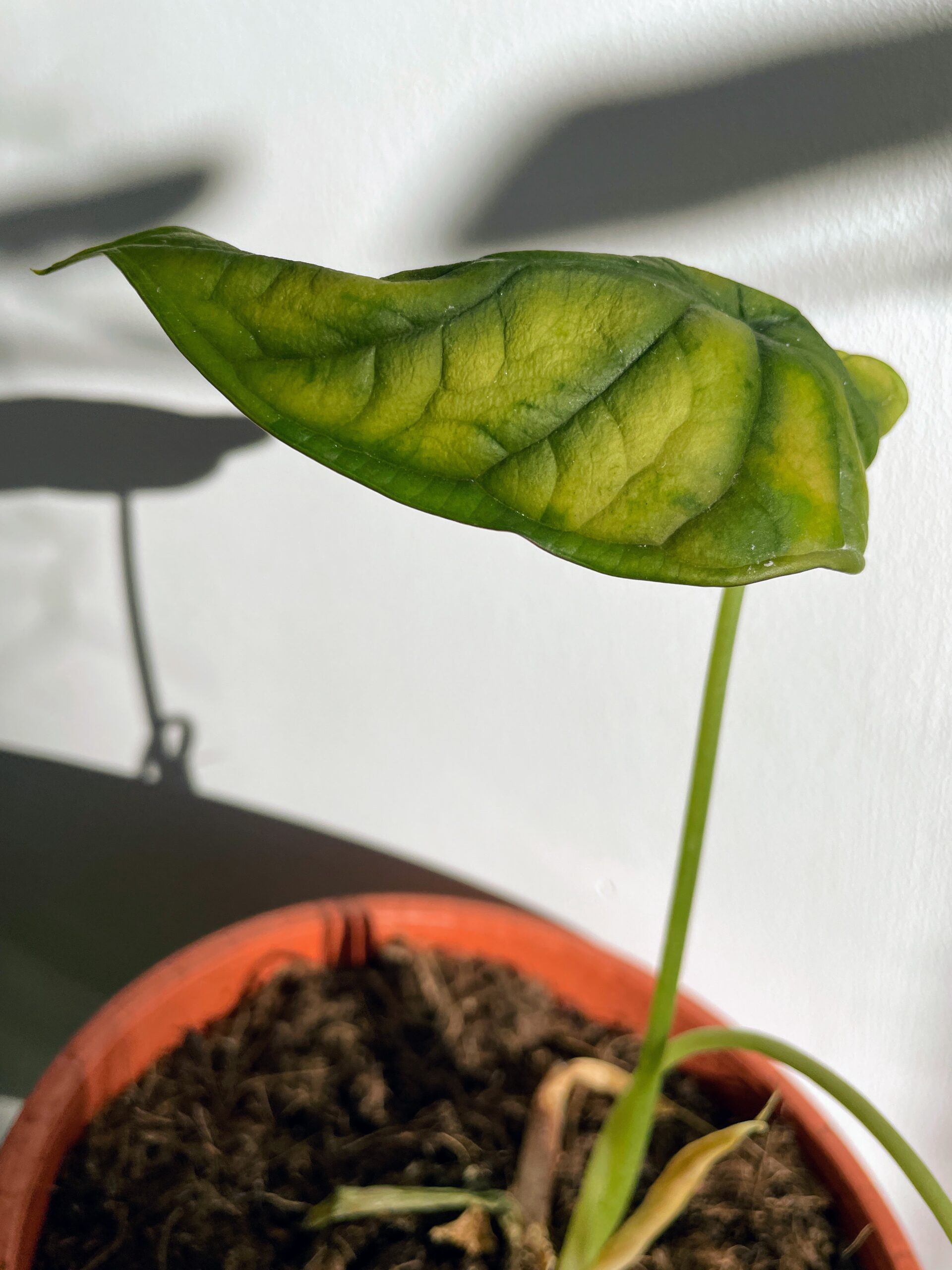

As temperatures cool and daylight reduces, your Alocasia notices.
Even indoors, changes in day length and humidity trigger a slowdown.
What happens in this phase
– Growth becomes noticeably slower.
– The plant may drop one or several older leaves.
– Soil stays wet longer, increasing risk of overwatering.
– Energy shifts back into the corm for winter preservation.
This is not a decline — it’s an adaptation.
How to support the plant
– Reduce watering frequency.
– Only water when the top 50% of the mix is dry.
– Stop fertilising completely.
– Increase airflow to avoid fungal issues.
– Keep the plant warm (20–27°C preferred).
What confuses most beginners
Alocasia will intentionally downsize in colder months.
That “dramatic yellowing" you’re seeing?
Often just an energy trade — one leaf sacrificed to support another.
4. Dormancy (Deep Rest Cycle)
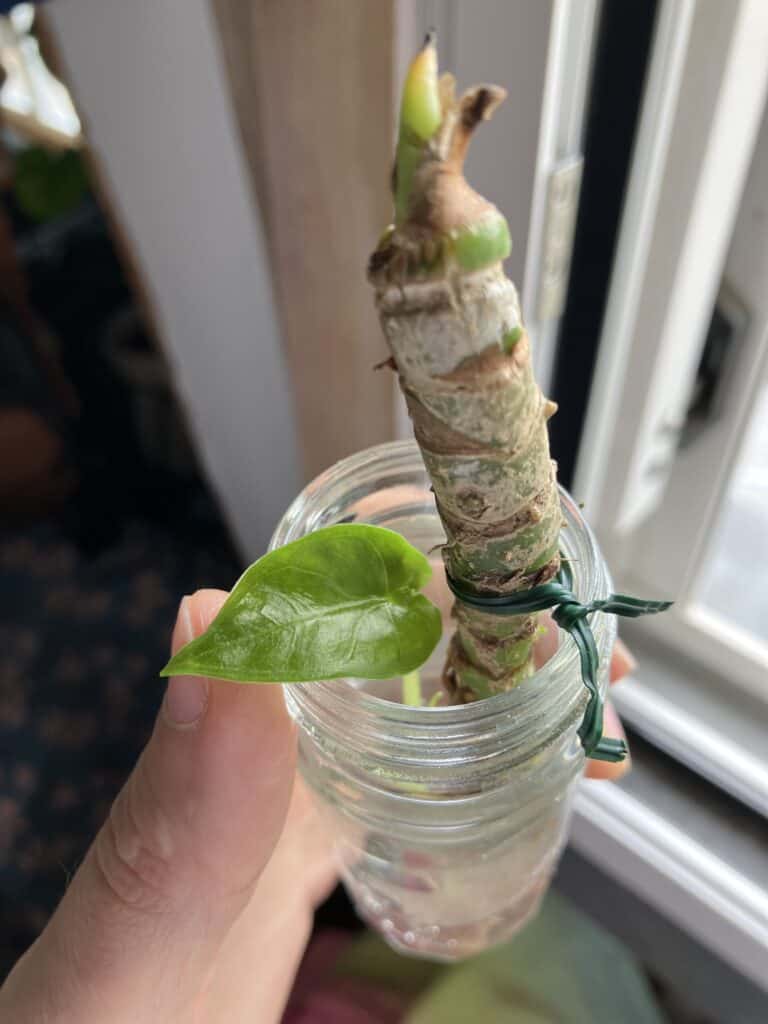

Not all Alocasia enter full dormancy indoors, but many will show some degree of it depending on the season and the species. This is when collectors panic — because the plant may look like it’s dying.
What dormancy actually is
A survival strategy.
The plant slows metabolic activity, reduces water use, and protects itself until conditions improve.
Signs of dormancy
– Leaves may die back entirely
– No new growth appears
– Soil dries extremely slowly
– The corm remains solid, firm, and alive underground
How to support the plant
– Keep soil slightly moist (never soggy, never crisp-dry).
– Avoid repotting during this time.
– Keep in low–medium light — growth is not expected.
– Maintain warmth if possible.
Dormancy is temporary.
Most Alocasia wake up again when:
– Daylight increases
– Temperatures rise
– You slightly increase watering
– They have built enough stored energy
Returning to Growth: The Spring Reset


Spring is your Alocasia’s “New Year.”
This is when almost every species — from Frydek to Silver Dragon to Pink Princess hybrid varieties — flips back into growth mode.
What triggers the reset
– Longer daylight hours
– Higher humidity
– Warmer temperatures
– A natural increase in sap flow
What you’ll see
– A new leaf initiates at the crown
– Soil begins to dry more quickly
– Petioles strengthen
– Dormant plants push out fresh spears
What you should do now
– Slightly increase watering
– Resume light fertilising
– Repot only if necessary (rootbound or old soil)
– Check for corm offsets — this is prime division season
The Lifecycle as a Circular Loop
Think of Alocasia not in a linear path but a rotating cycle:
Energy Storage → Active Growth → Seasonal Slowdown → Dormancy → Wake-Up → Back to Growth
Each cycle strengthens the plant’s corm.
Each corm makes the plant more resilient, more stable, and more capable of producing mature leaves.
This circular rhythm is one of the reasons Alocasia are adored in the rare plant community — they’re alive in a way that feels unmistakably rhythmic, connected to the seasons, and rewarding when you learn to read their signals.
How the Lifecycle Affects Your Care Routine
Watering Adjustments Through the Year
– Growth Season: Water when soil dries 40–50%
– Slowdown: Allow more drying time
– Dormancy: Keep soil barely moist
– Spring Reset: Gradually increase watering again
Overwatering in low-light periods is the number one cause of Alocasia decline. Matching water to the lifecycle prevents almost every problem beginners face.
Light Requirements Through the Year
– Bright, indirect light always produces the strongest leaves.
– In winter, move the plant closer to a window or use a grow light to prevent yellowing and drops.
Feeding and Nutrients
– Only feed during active growth.
– Stop entirely during slowdowns and dormancy — the plant cannot use nutrients efficiently, and they may build up in the soil.
Soil and Repotting
Repot only during an active growth phase.
This is when the root system can recover fastest.
A chunky, fast-draining mix helps your plant throughout all stages of the lifecycle by avoiding waterlogging while maintaining moisture:
– 40% premium aroid mix
– 30% perlite
– 20% coco coir
– 10% bark, pumice, or charcoal
Common Questions About the Lifecycle
“My Alocasia lost all its leaves. Is it dead?”
Not necessarily — often not at all.
Check the corm. If it is firm, the plant is alive and will regrow.
“Why is only one leaf yellowing?”
Natural energy reallocation. Alocasia often keep two to four leaves depending on variety and conditions.
“Why is winter so hard for Alocasia?”
Low light + cool temperatures slow everything down.
Water consumption drops dramatically, so it becomes easier to accidentally overwater.
“When do I expect the biggest leaves?”
Typically mid-spring through summer when daylight and warmth are abundant.
Lifecycle Summary (Beginner Version)
– Alocasia grow in cycles, not continuously.
– They store energy in the corm, spend it on new leaves, then rest.
– Leaf drops are often normal, especially seasonally.
– Dormancy is a protective pause, not death.
– Spring restarts growth in almost every species.
– Understanding the cycle eliminates most beginner worry.
Collector Notes
The lifecycle is what makes Alocasia both fascinating and deeply rewarding. Once you understand the rhythm, you stop reacting to every yellow leaf — and instead start reading your plant like a cue sheet. You’ll know when to repot, when to feed, when to rest, and when to push growth.
This guide gives beginners a simple, reliable foundation — and prepares them to move confidently into more advanced topics like corm propagation, variegation stability, and species-specific dormancy patterns.