
Velvety, elongated leaves with golden shimmer — a collector favourite that thrives under the right balance of light, humidity, and support.
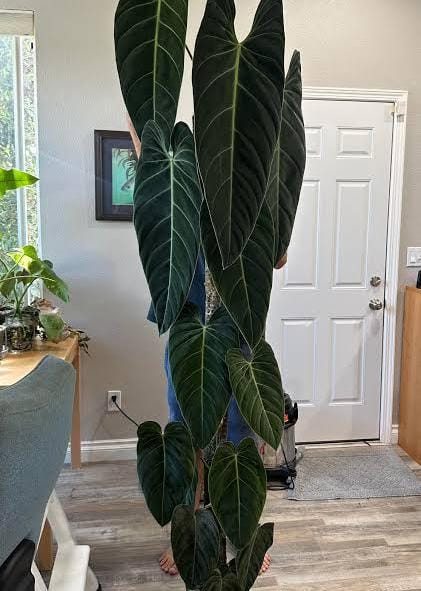


The Philodendron Melanochrysum, often called “Melano,” is one of the most elegant velvet-leaf aroids in modern collections. Known for its deep emerald leaves, golden sheen, and dramatic size potential, it grows into a breathtaking climbing specimen when given the right support.
Despite its luxurious appearance, the Melanochrysum is surprisingly manageable for beginners — as long as its basic needs are respected. This guide covers everything you need for consistent, healthy growth.
Why Collectors Love Melanochrysum
Melanochrysum is one of the best “statement aroids” because it combines dramatic beauty with steady growth.
Collector Advantages
– Velvet leaves with metallic gold hues
– Fast vertical growth when climbing
– Large mature leaves (30–60 cm) in good conditions
– Adaptable to home humidity levels
– Recovers quickly from pruning
– Striking presence even in smaller spaces
It offers the rewarding transformation from small juvenile leaves to long, velvety adult foliage — a process collectors enjoy watching season by season.
Light Requirements
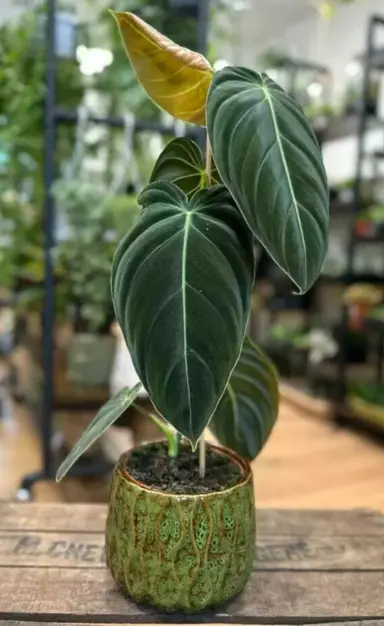


Light is the single most important element for keeping a Melanochrysum healthy, firm, and richly coloured.
Ideal Light
– Bright, indirect light
– A position near an east or north-facing window
– A grow light placed 30–45 cm above the plant
Too Little Light
– Small leaves
– Stretchy internodes
– Faded colour
– Slower growth and weaker stems
Too Much Light
– Yellowing or bleaching
– Crispy velvet texture
– Burnt leaf margins
Aim for a soft brightness that mimics forest understory light — bright enough to fuel growth but never harsh.
Watering Needs
Melanochrysum roots prefer moisture, but they cannot sit in saturated or compacted soil.
Watering Guide
– Allow the top 40–50% of the soil to dry between waterings
– Water deeply and let excess drain
– Avoid keeping the pot constantly wet
– Reduce watering slightly during winter
Signs of Overwatering
– Yellow lower leaves
– Soft, mushy roots
– Persistent wetness in soil
– Foul soil smell
Signs of Underwatering
– Drooping that feels dry rather than limp
– Pale or papery leaf texture
– Curling edges
Correct watering rhythm prevents 90% of the most common issues Melanochrysum owners encounter.
Humidity & Temperature


Melanochrysum does best in moderate to high humidity, but it is not excessively demanding.
Humidity Range
– Ideal: 60–75%
– Acceptable: 50–55%
– Avoid prolonged dips below 40%
Higher humidity enhances leaf texture, reduces crisping, and supports larger growth.
Temperature Range
– Best: 20–28°C
– Minimum: 16°C
– Keep away from drafts, heaters, and air-conditioning streams
Stable warmth and moderate humidity will help your Melano produce larger, firmer leaves over time.
Soil & Potting Mix
The right mix is essential for preventing root rot while maintaining even hydration.
Recommended Mix
– 40% premium aroid mix
– 30% perlite
– 20% coco coir
– 10% bark or pumice
Potting Tips
– Ensure excellent drainage
– Use a pot only 2–4 cm wider than the previous one
– Repot every 12–18 months or when roots circle the bottom
A chunky, breathable substrate allows roots to oxygenate and take up water efficiently — crucial for velvet-leaf species.
Growth Pattern & Support Structure


Melanochrysum is a natural climber. Without support, it will grow horizontally, producing smaller leaves. With support, it transforms.
Benefits of Providing a Pole or Trellis
– Dramatic increase in leaf size
– Stronger root grip and stability
– More vibrant colour and sheen
– Healthier vertical growth pattern
Types of Support
– Moss poles (best for hydration and grip)
– Coco poles
– Slatted trellises
– Branch-style natural supports
How to Train the Plant
– Gently tie or clip the vine to the pole
– Mist the pole occasionally to activate aerial roots
– Keep the plant upright to reduce stem stress
A supported Melano becomes a true centrepiece.
Feeding & Fertiliser
Melanochrysum benefits from regular but balanced nutrition.
Fertilising Plan
– Use a balanced liquid fertiliser (e.g., 3-1-2 or 2-1-2)
– Feed every 2–4 weeks during active growth
– Reduce in winter
– Avoid over-fertilising — velvet leaves burn easily
Nutrient Deficiency Signs
– Pale new leaves
– Slow elongation
– Weak stems
Stable feeding supports larger leaves and richer colour.
Propagation Overview


Melanochrysum is easily propagated through node cuttings.
Best Propagation Methods
– Single-node cuttings
– Top cuttings
– Water rooting
– Perlite or moss rooting
When to Propagate
– During mid-spring to late summer
– When the plant has strong, healthy internodes
– When aerial roots begin to form
Melanochrysum cuttings typically root quickly in warm, humid environments.
Common Issues & How to Solve Them
1. Yellowing Leaves
– Often watering-related
– Check soil moisture and root health
– Remove old yellowing leaves (normal lower-leaf ageing is expected)
2. Brown Edges or Spots
– Too much light
– Low humidity
– Fertiliser burn
Adjust environment accordingly.
3. Leggy Growth
– Move to brighter indirect light
– Provide a climbing support
– Prune to encourage compact growth
4. Velvet Leaf Damage
Velvet surfaces bruise easily — avoid wiping aggressively or touching new leaves frequently.
Why Melanochrysum Is Worth Growing
– Elegant, velvety texture unlike any other Philodendron
– Incredible size potential with support
– Visually striking in minimalist or lush plant rooms
– Perfect balance of exotic beauty and manageable care
– Highly rewarding for beginners and collectors alike
The Melanochrysum is a plant you grow not just for its foliage, but for how dramatically it evolves over time.
Collector Notes
Philodendron Melanochrysum rewards growers who provide stable warmth, soft bright light, and supportive climbing structures. With a breathable soil mix and consistent watering, the plant grows predictably and expresses its velvet sheen beautifully.
This is one of those rare aroids that truly feels alive — stretching, climbing, and transforming with every new leaf.