
How rare aroids create new life, and how PDA grows stable, healthy propagations for collectors.
Propagation is the heart of PDA Exotic Plants. Every plant you receive — whether it’s an Alocasia corm, a Philodendron rooted cutting, or an established Anthurium — comes from a propagation method chosen intentionally for the long-term health and genetic stability of the plant.
This guide simplifies the entire propagation process for beginners, giving you a clear understanding of how rare plants multiply, why different species require different approaches, and what standards PDA uses to ensure every plant sent out is strong, stable, and resilient.


Why Propagation Matters in Rare Plant Collecting
Propagation shapes everything:
– The stability of variegation
– The size and health of future leaves
– Root system strength
– Pest resistance
– The growth pattern of the plant
– How quickly a plant recovers after shipping
A well-propagated plant behaves differently — it grows confidently, roots deeply, and adapts to new environments without collapsing. A poorly propagated plant can struggle for months or die from weak internal structure.
Propagation is not cutting and hoping; it is an energy-managed process based on species biology.
Three Core Propagation Types Used at PDA
Different plants require different techniques. PDA relies on three primary propagation categories:
1. Corm Propagation (Alocasia)
Alocasia naturally produce corms — small underground storage organs that behave like batteries. From these, new plants can emerge genetically identical to the parent.
2. Node Propagation (Philodendron, Scindapsus, Pothos)
Climbing and vining aroids grow from nodes, each with the potential to create roots and foliage.
3. Division Propagation (Anthurium, Large Alocasia, Rhizomatous Species)
Mature plants often form multiple crowns or growth points that can be gently separated.
Each method has its own rhythm, risks, and timing. The rest of this guide explores each system simply and clearly.
Corm Propagation: How Alocasia Multiply


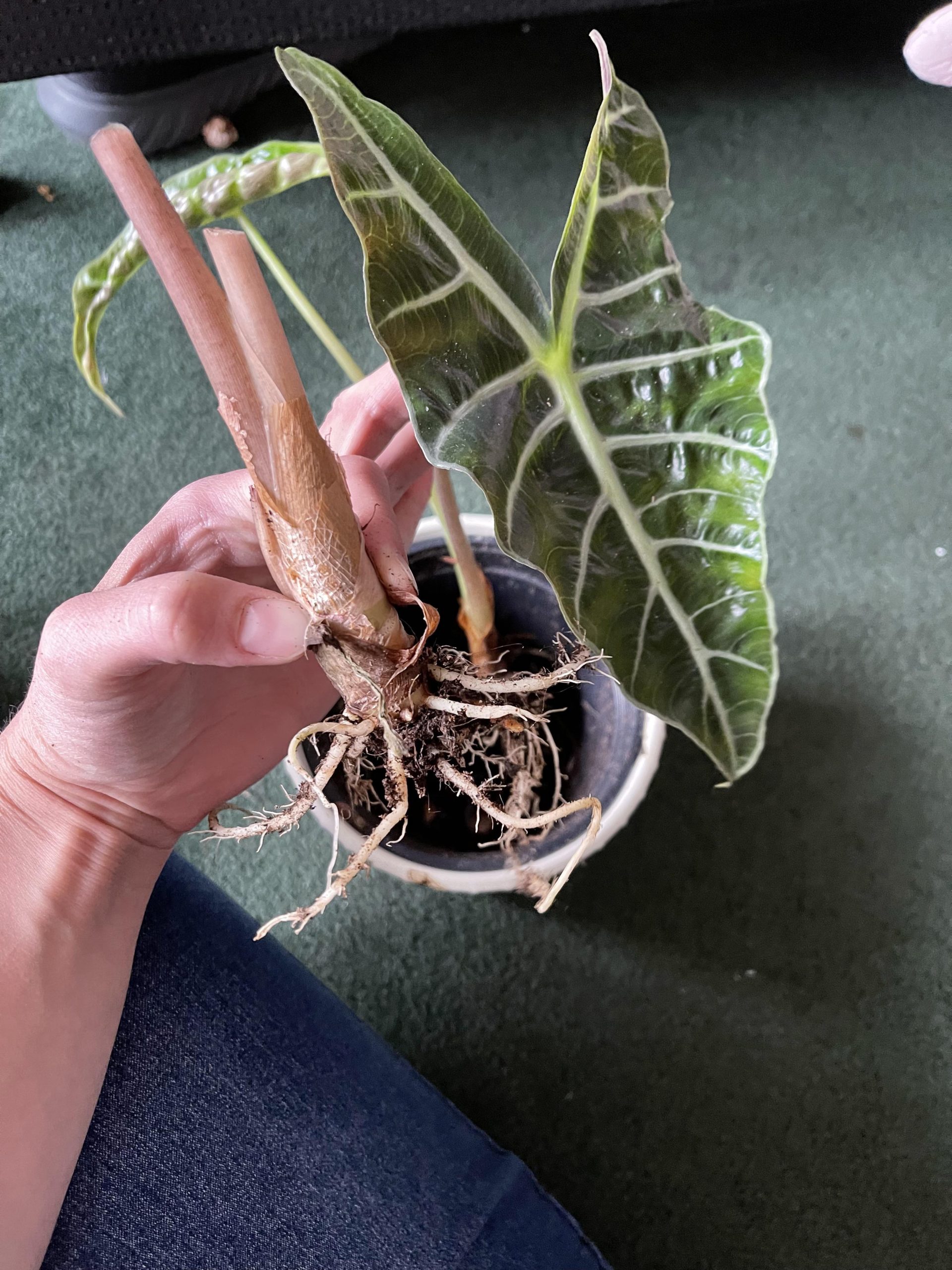
Corm propagation is one of PDA’s specialties. Many Alocasia species — from Black Velvet to Silver Dragon to Maharani — create corms throughout their lifecycle.
What a corm is
– A firm, nutrient-dense organ
– Stores carbohydrates and moisture
– Emulates a “restart button” for the plant
– Fully capable of producing a new Alocasia
How corms form
Corms develop:
– Along the main root system
– Near the crown
– Beneath older leaves
– As part of the plant’s natural energy cycle
A single mature Alocasia may produce anywhere from 3–20 corms per year depending on health and species.
Propagation process (PDA method)
– Corms are gently removed and cleaned
– Dead tissue is peeled back to reveal firm flesh
– They are sanitised to prevent fungal issues
– They are then grown in controlled humidity environments
– Each corm receives consistent warmth and airflow
– Once roots and shoots develop, they are moved to soil
Why PDA-grown corms are stable
– We only propagate from healthy parent plants
– Corms are never forced or stressed into production
– Each corm is individually assessed before sale
– We grow corms long enough to establish strong roots
This creates a significantly healthier plant than fresh, unrooted corms often sold online.
Node Propagation: The Engine Behind Vining Aroids
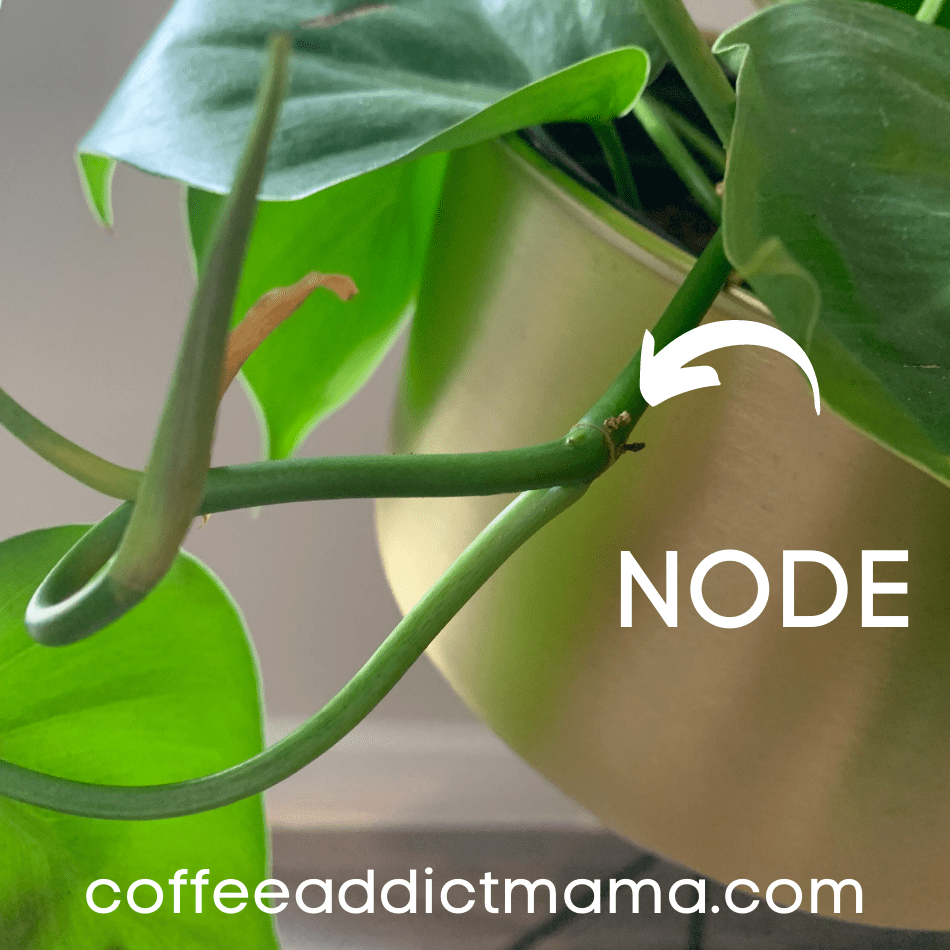


Node propagation is the backbone of Philodendron cultivation. Every node contains the blueprint for a new plant.
What a node contains
– A growth point (future leaf)
– A root nub or aerial root
– Vascular tissue linking it to the parent plant
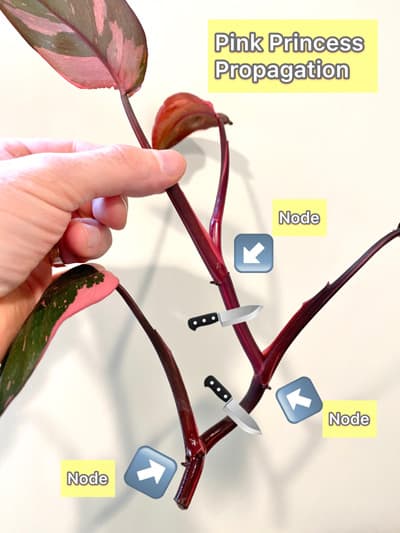
If a cutting includes a node, it can become a new plant. If it doesn’t, it never will.
Common forms of node propagation
– Single-node cuttings
– Multi-node cuttings
– Wetsticks (small segments with node tissue)
– Top cuts (cuttings with multiple nodes and a growing tip)
PDA’s propagation approach
PDA focuses on stability and growth potential:
– Only vigorous mother plants are selected
– Cuttings are taken with sharp, sterilised tools
– Nodes are cleaned and inspected for pests
– All propagations are allowed to callus before rooting
– Rooting is done in controlled environments (not rushed)
– Cuttings are transitioned gradually to soil
Why this method works
– Minimises rot
– Ensures strong root development
– Maintains variegation stability in variegated species
– Reduces transplant shock
A well-rooted Philodendron cutting can grow continuously for months once established.
Division Propagation: Safe Splitting for Mature Plants
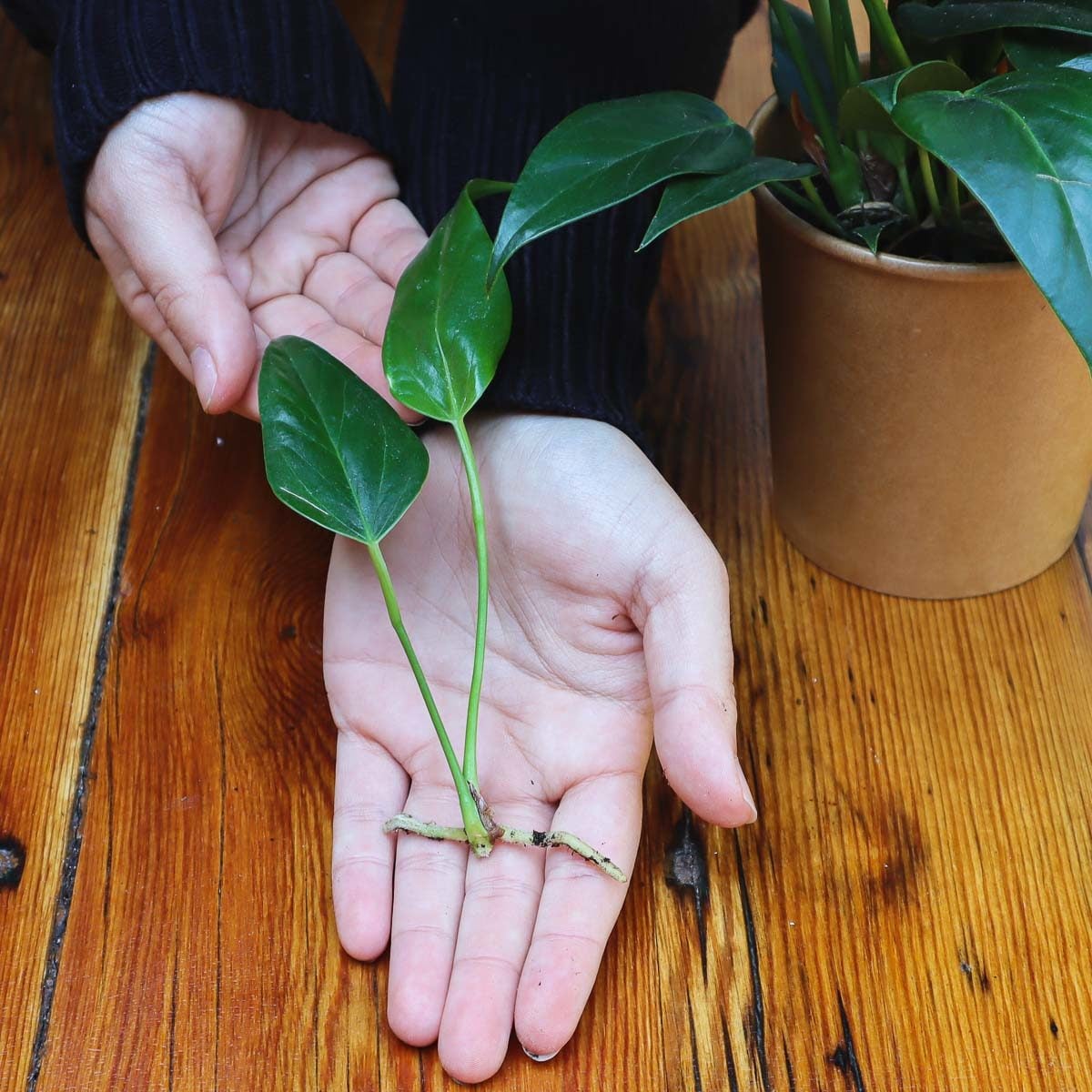

Division is the gentlest propagation method because it respects fully developed root systems.
Where division applies
– Anthuriums with multiple crowns
– Alocasia clumps
– Rhizomatous species that naturally spread sideways
– Older plants with clear, separable growth points
The division process
– The root ball is gently loosened
– Growth points are separated along natural fault lines
– Each division keeps its own root mass
– Damaged roots are trimmed
– Divisions are placed into fresh soil and stabilised
Advantages of division
– No rooting period required
– Minimal shock
– Immediate growth continuation
Why PDA uses division sparingly
Healthy division requires:
– A large, mature parent plant
– A stable root system
– Clear structural separation
We only divide when the plant is ready — not when stock demands it.
Propagation Environments at PDA
Propagation success depends on environmental control. PDA uses a four-layer system:


1. Humidity control
– 65–85% depending on species
– High enough to support rooting
– Controlled airflow to prevent fungal issues
2. Temperature stability
– 22–28°C optimal
– Consistent warmth encourages cell division
3. Soft, oxygenated substrate
– Coco coir
– Perlite
– Sphagnum moss
– Aroid mixes depending on species
4. Gradual transition
The most important step. Plants are:
– Taken from high humidity
– Slowly acclimated to room humidity
– Then transitioned to soil
– Then moved to standard care conditions
This prevents collapse after shipping or repotting.
Timing: When PDA Chooses to Propagate
Propagation is never random. Each species has ideal timing.
Alocasia
– Late spring to early summer
– During active growth
– When corm production naturally increases
Philodendron
– Year-round in stable conditions
– Preferably during warmer months
– When nodes are plump and active
Anthurium
– When multiple growth points exist
– After the root system fills the pot
– Never during dormancy or slowdowns
Why timing matters
Propagation is an energy expense. PDA only propagates when the parent plant has energy surplus, ensuring the resulting propagation has:
– Strong roots
– Full genetic expression
– Resilience to transplant stress
From Prop to Plant: How PDA Prepares Them for You
Propagation doesn’t end when roots appear. PDA follows a full development process:
1. Rooting phase
– Controlled humidity
– Monitored airflow
– Sterile environment
– Zero fertiliser
2. Transition phase
– Reduction of humidity
– Increase in airflow
– Introduction to soil-based substrate
3. Establishment phase
– Consistent watering rhythm
– Light fertilising
– Monitoring leaf firmness
– Growth tracking
4. Hardening phase
– Plants adapt to ambient room humidity
– Roots anchor deeply into soil
– Leaf production stabilises
– Plants become “collector-ready”
Only after successful hardening is a plant listed for sale.
Why PDA-Grown Plants Are More Stable
Propagation quality determines long-term health. PDA’s process ensures:
– No fresh-cut, unrooted or weakly rooted plants
– No rushed propagation cycles
– Every plant is monitored individually
– Only strong propagations move to the store
– Each plant is grown past the fragile stage
This is why PDA plants acclimate quickly in new homes — their internal architecture is already established.
Common Beginner Questions
“Can I propagate my new plant right away?”
Not recommended. Let the plant grow and stabilise first.
“Is a tiny root on an Alocasia corm enough?”
No — wait for both root and shoot development.
“Why do some wetsticks fail?”
They require extremely controlled environments and patience; not all nodes are viable.
“How long does propagation take?”
Depending on species, anywhere from 3 weeks to 6 months.
“Why are PDA propagations more expensive than unrooted ones online?”
Because they’re fully developed, stable, and far less likely to fail.
Collector Notes
Propagation is where science and patience meet. When done correctly, it produces strong, resilient rare plants with long lifespans and predictable growth. Understanding this overview prepares beginners for deeper topics like:
– Advanced variegation stability
– Tissue-culture differences
– Breeding and hybrid development
– Multi-stage corm cycling
– Chunk propagation for rare Philodendrons
This basic guide is your foundation — the first step toward mastering rare plant propagation.