

Few plant behaviours confuse collectors more than Alocasia dormancy. One moment your plant is thriving with multiple leaves, and the next, it begins dropping foliage, slowing growth, or retreating to a single leaf—or none at all.
Many owners mistake dormancy for disease or decline, resulting in over-correcting with more watering, more repotting, or more fertiliser.
But here’s the truth:
Dormancy is completely normal.
It is a survival strategy, and nearly all Alocasias—from Black Velvet to Silver Dragon to Zebrina—go through it at some stage.
This introductory guide explains what dormancy is, why it happens, how to spot it, and how to care for your Alocasia during this natural cycle.
What Dormancy Actually Is
Dormancy is a temporary rest period where the plant conserves energy and slows its metabolic processes.
It’s comparable to a “sleep mode”—the plant stops expanding because conditions are no longer ideal for growth.
During dormancy, Alocasia will:
– Grow very slowly or not at all
– Produce smaller leaves temporarily
– Drop one or more existing leaves
– Pull energy into the corm (storage organ)
– Pause root development
Alocasia are extremely energy-efficient “resource managers.” When they sense environmental changes that aren’t optimal, they simply shut down to survive.
Why Alocasia Go Dormant
Dormancy is triggered by external signals. Here are the most common reasons:
1. Seasonal Light Changes (Most Common Trigger)
Alocasia respond strongly to the amount of light they receive.
– Shorter days
– Weaker winter sunlight
– Cloudy periods
– Plant moved away from a window
Any reduction in light tells the plant: “It’s not safe to push new growth.”
2. Temperature Drops
Even subtle temperature changes can trigger dormancy.
– Nights under 18°C
– Cold draughts
– Air conditioning
– Winter chills
Alocasia come from tropical regions; they slow down instantly when temperatures fall.
3. Watering Stress
Both extremes can trigger dormancy:
– Chronic over-watering chokes the roots
– Consistent under-watering dries them out
Either condition tells the plant to shut down and rely on the corm.
4. Root Damage from Repotting or Disturbance
If you’ve recently:
– Repotted
– Trimmed roots
– Changed the soil mix
– Divided corms
Your Alocasia may pause growth to rebuild roots.
5. Natural Growth Rhythm
Some Alocasias—especially jewel species—naturally cycle through “flushes” of growth followed by rest.
Even in perfect conditions, they may:
– Produce 1–2 leaves
– Pause for 2–6 weeks
– Resume growth once energy rebalances
Not every pause is a sign of trouble.
How to Know if Your Alocasia Is Dormant (vs Dying)
This is where most people panic. Dormancy looks dramatic, but there are reliable signs that your plant is simply resting.
Signs of Normal Dormancy
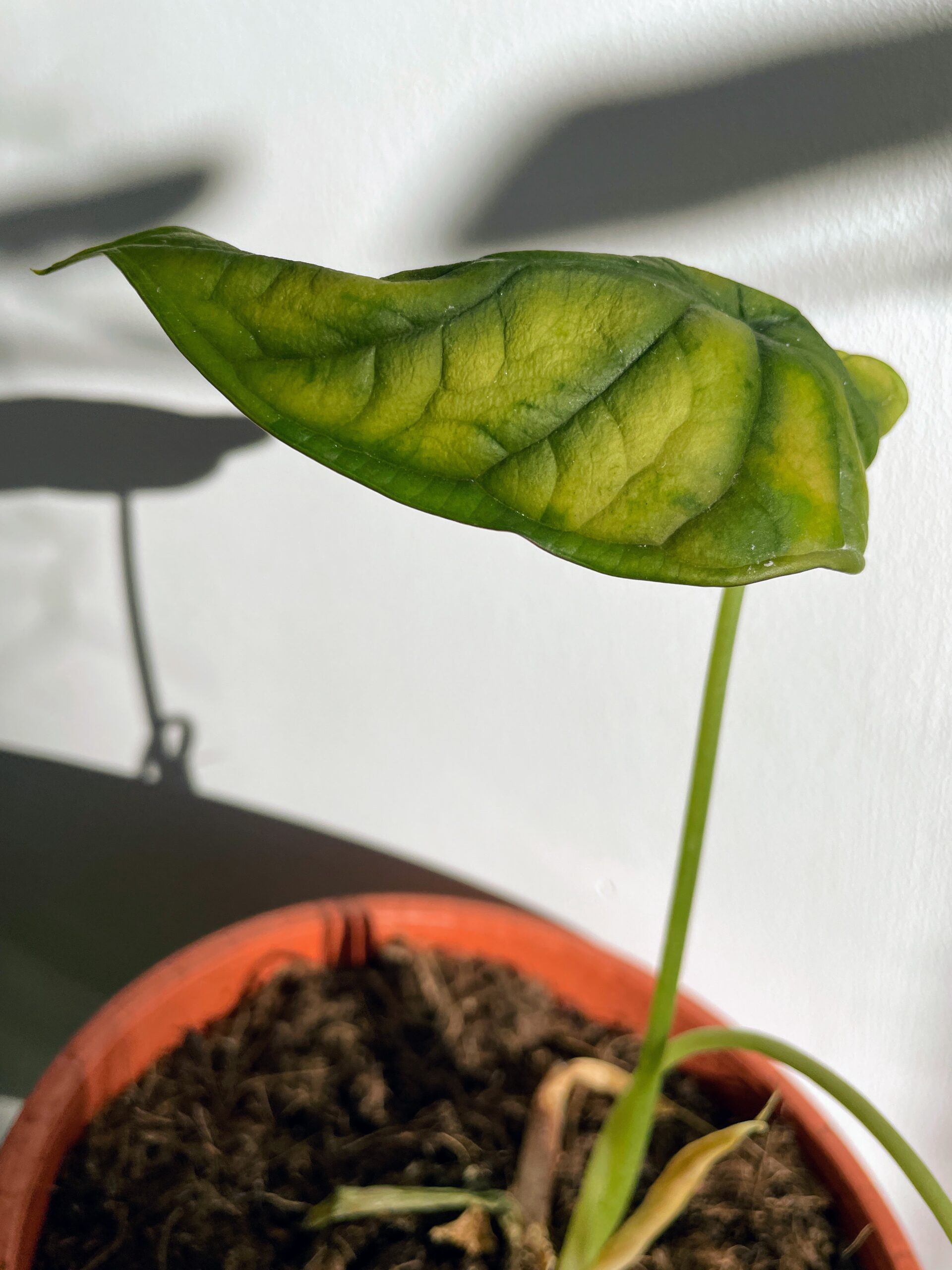
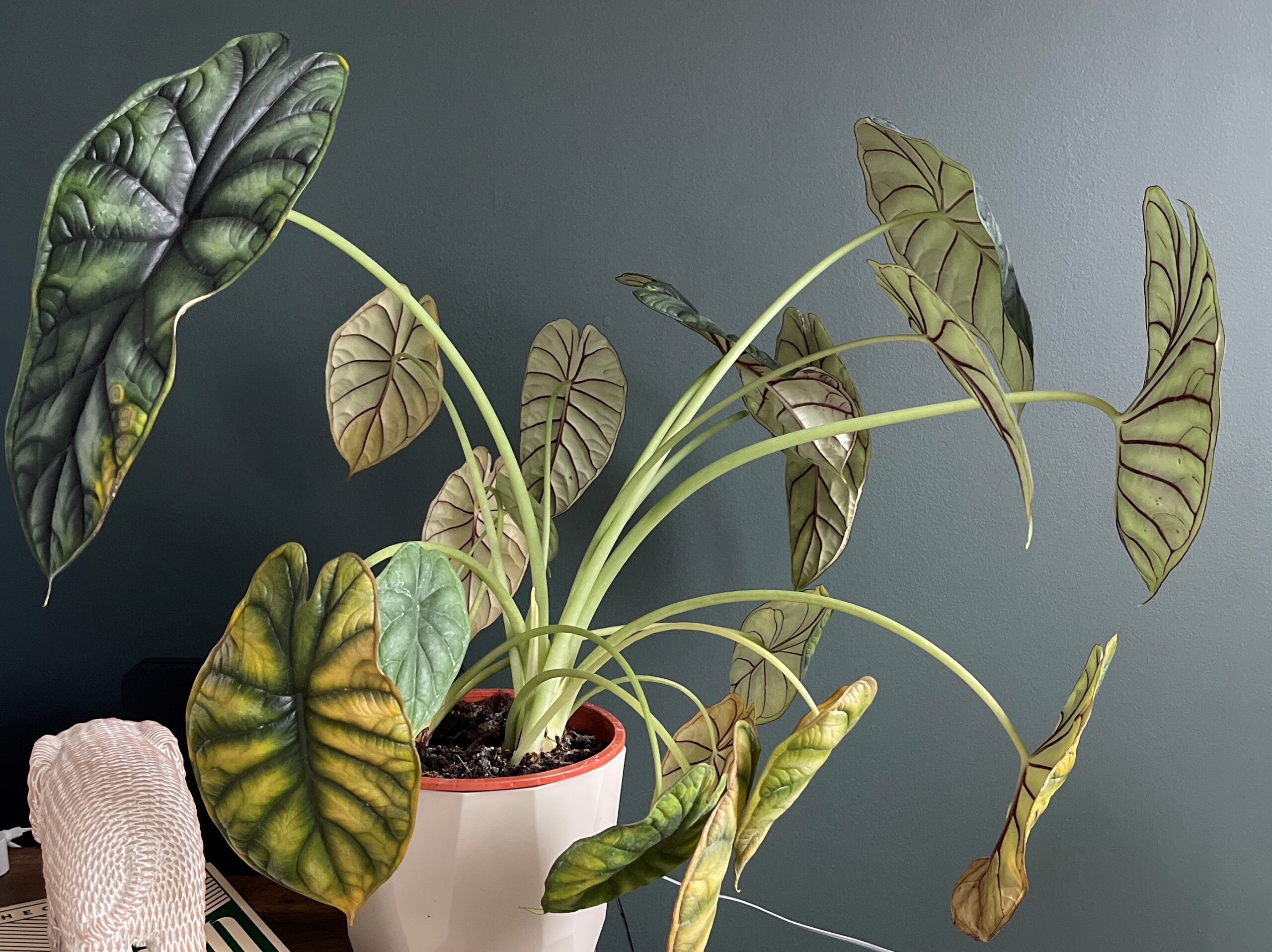
– Leaves yellow one at a time
– Petioles droop slowly, not overnight
– New leaves stop emerging
– Soil dries slower because roots are less active
– Corm feels firm and healthy
– No foul smell or mushy texture
A dormant plant still has life—just not above the soil.
Signs of Root Rot or Decline (Not Dormancy)


If you see these symptoms, the issue is not dormancy:
– Mushy, soft, or smelly corm
– Brown or black roots
– Wet soil that never dries
– Rapid leaf collapse
– Multiple leaves yellowing at once
– Leaves spotting or melting
Dormancy = slow, controlled decline in foliage.
Rot = fast, chaotic collapse.
What Happens Inside the Plant During Dormancy
Dormancy isn’t a shutdown—it’s a reset.
Inside the corm:
– Nutrients are stored
– Energy reserves concentrate
– Immature growth stops developing
– Roots pause expansion
– The plant prepares for the next active season
Even if your plant drops every leaf, the corm remains alive and is capable of regrowing once conditions improve.
This is why many growers say:
“Never throw out an Alocasia until you’ve checked the corm.”
How to Care for Your Alocasia During Dormancy
Caring for a dormant Alocasia is very different from caring for an actively growing one.
1. Reduce Watering (Most Important Rule)
Dormant Alocasias drink less. Much less.
– Allow the top 50–70% of soil to dry out
– Water sparingly and evenly
– Never let the soil stay soaked
The biggest dormancy-related deaths occur from over-watering when the plant isn’t growing.
2. Provide Gentle, Consistent Light
Light won’t wake a dormant Alocasia, but it prevents decline.
– Place closer to a window
– Use soft morning light
– Avoid harsh afternoon sun
– Keep it in a bright, warm room
Dormant plants may not grow, but they still photosynthesise enough to maintain vital functions.
3. Maintain Warm Temperatures
Keep your Alocasia between:
– 20–26°C during the day
– Above 18°C at night
If the temperature drops too low, the dormancy deepens and lasts longer.
4. Stop Fertilising
Fertiliser is meant for active growth. During dormancy:
– Roots cannot absorb nutrients properly
– Fertiliser salts build up
– Soil becomes more stressful
Wait until a new leaf appears before feeding again.
5. Avoid Repotting
Never repot a dormant Alocasia unless:
– The soil is causing rot
– You are rescuing the corm
Repotting during dormancy creates unnecessary stress.
6. Increase Humidity (But Not Too Much)
Aim for:
– 50–60% humidity
High humidity helps keep the remaining foliage healthy, but:
– Avoid excessively damp environments
– Avoid covering the plant (no domes or bags)
Too much trapped moisture encourages bacteria.
How Long Dormancy Lasts
Dormancy duration depends on:
– Season
– Temperature
– Light levels
– Moisture
– Species
Typical dormancy lasts:
– 4–12 weeks in mild conditions
– 12–20 weeks in winter or colder climates
Alocasia can—and often do—come back from complete leaf loss once conditions improve.
How to Wake an Alocasia from Dormancy
You cannot force a plant to break dormancy, but you can encourage it by improving conditions.
1. Increase Light Gradually
Move it slightly closer to a window or add a low-intensity grow light.
– Bright indirect light
– No direct afternoon sun
– 8–12 hours per day
More light = signal for growth season.
2. Raise Temperature
Dormancy breaks faster above:
– 22°C consistently
Warmth activates metabolic processes in the corm.
3. Water Just a Little More Frequently
Once new growth appears:
– Water when top 40–50% of soil is dry
– Avoid large, soaking waterings at first
The roots need time to re-activate.
4. Wait for a Growth Trigger
New growth often emerges when the plant senses:
– More light
– Warmer days
– Longer photoperiod
Patience is the key. Alocasias respond slowly but reliably.
When to Check the Corm
If your plant has:
– Dropped all leaves and
– Not shown growth for 8–12 weeks
…then it’s time to gently unpot and inspect.
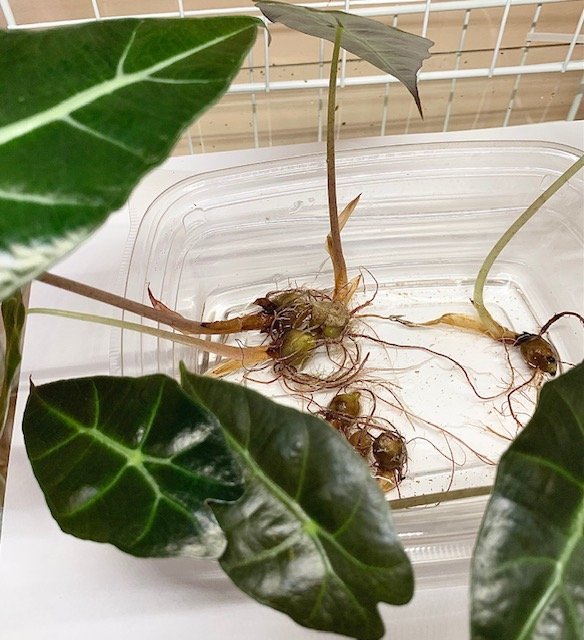
A healthy corm will be:
– Firm
– Pale or golden inside when sliced
– Free from smell or mush
– Surrounded by small root nubs
A damaged corm will be:
– Soft
– Brown or black
– Foul-smelling
– Hollow or collapsing
If rot is found, you can:
– Cut back to healthy tissue
– Dust with cinnamon or fungicide
– Repot into fresh, airy medium
In many cases, even a partially damaged corm will regrow.
Species Differences: Which Alocasias Go Dormant More Easily?
Some Alocasia species are more prone to seasonal dormancy:
More prone:
– Silver Dragon
– Dragon Scale
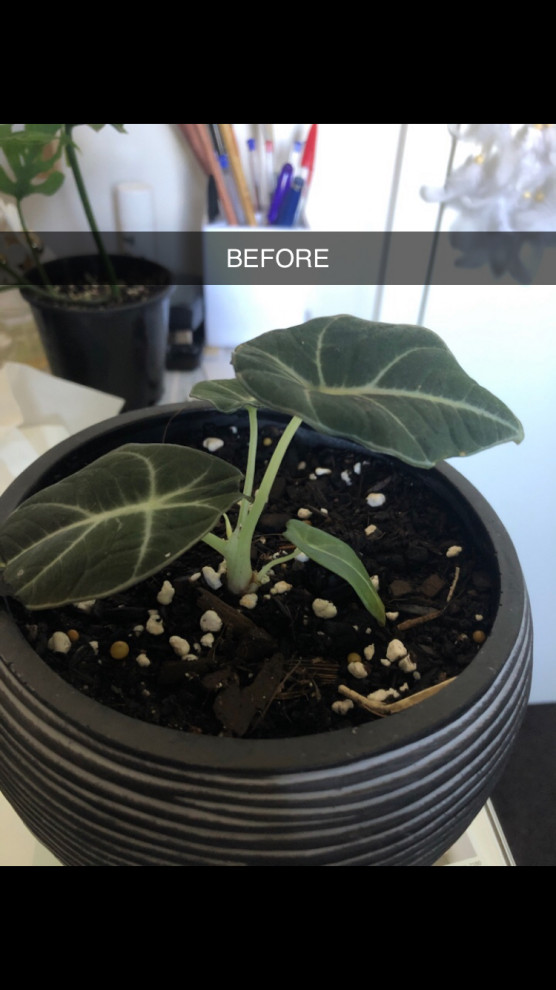
– Black Velvet
– Micholitziana (Frydek)
– Melo
– Cuprea
These jewel types respond strongly to temperature and light shifts.
Less prone:
– Zebrina
– Odora
– Macrorrhiza
– Amazonica (Polly)
– Regal Shield
These larger upright species often maintain year-round growth if conditions stay warm.
Common Myths About Alocasia Dormancy
Myth 1 — “If all the leaves drop, the plant is dead.”
False. This is extremely common and reversible.
Myth 2 — “You should water more during dormancy.”
Over-watering kills dormant Alocasias.
Myth 3 — “Dormancy happens only in winter.”
It can occur anytime conditions shift—light, water, or temperature.
Myth 4 — “Repotting a dormant plant helps it wake up.”
It stresses the plant and extends dormancy.
Myth 5 — “Dormancy means you’ve done something wrong.”
Not true—dormancy is a natural cycle.
Final Thoughts: Dormancy Is a Reset, Not a Failure
Dormancy is part of the Alocasia experience. Understanding it makes you a calmer, more confident collector.
A dormant Alocasia is not dying—it’s resting to survive.
Give it:
– Less water
– More light
– Stable warmth
– Time
…and it will reward you with fresh growth once conditions improve.