
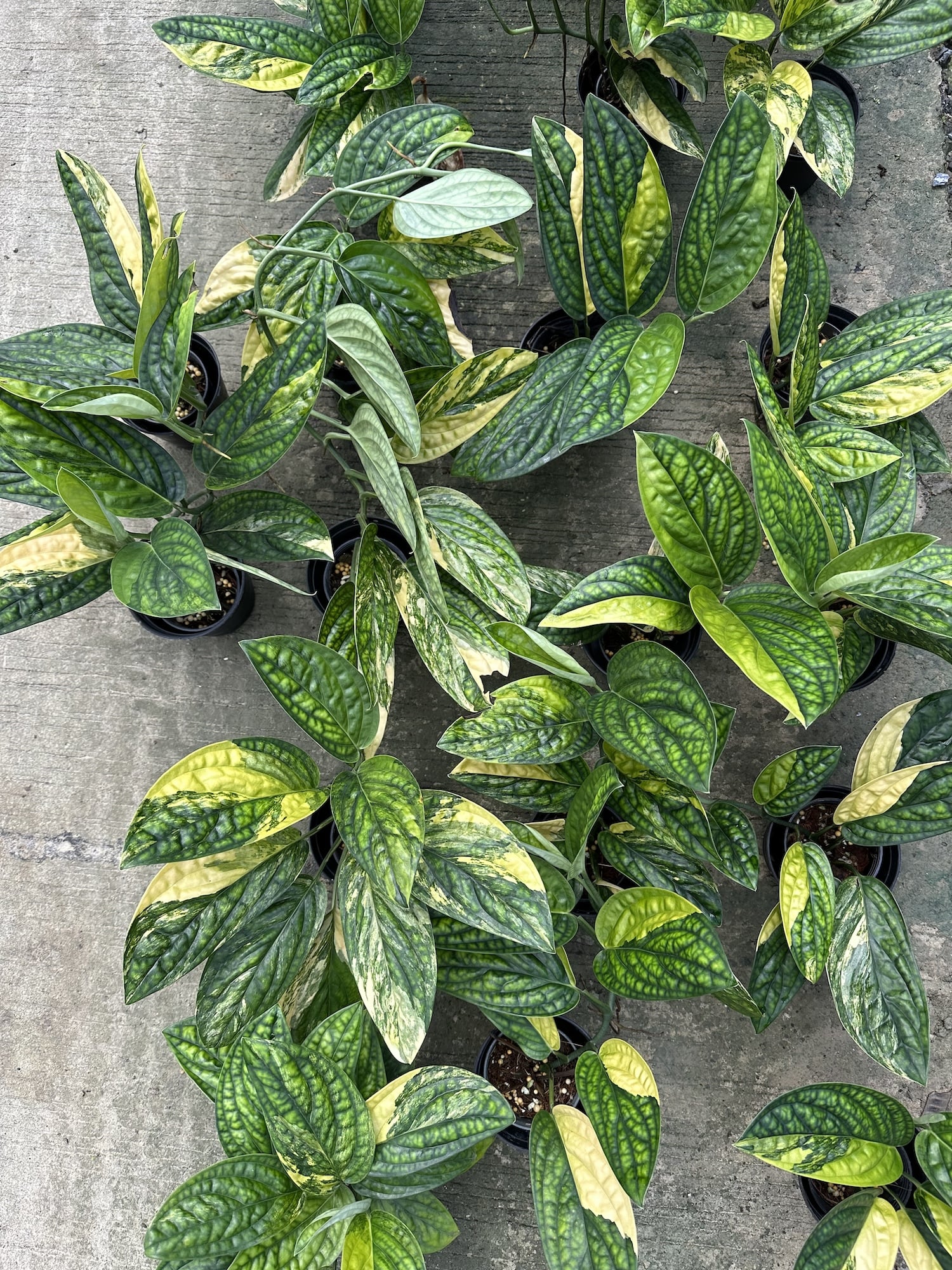
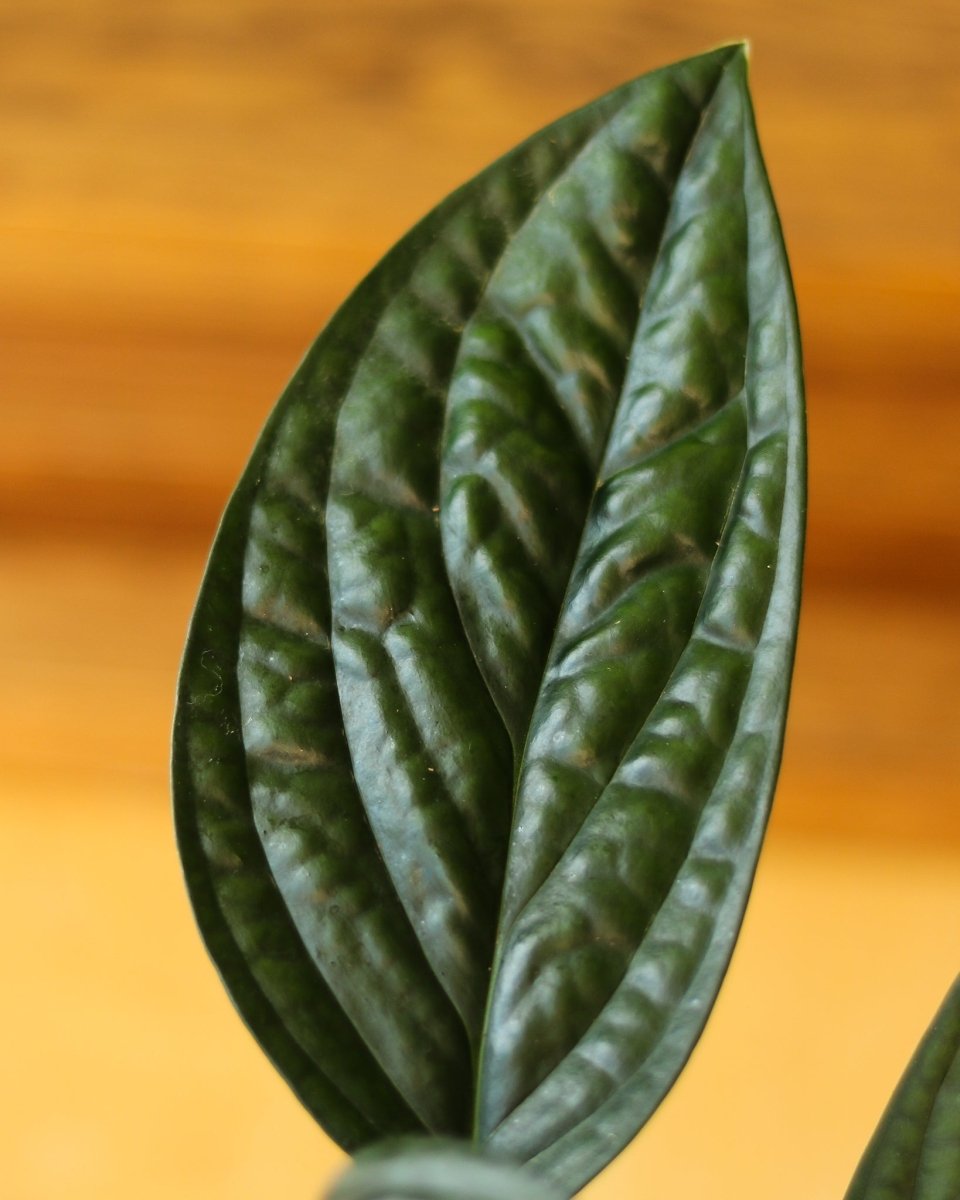
Monstera Peru (Monstera karstenianum) is one of the most deceptively easy rare plants you can grow. With thick, glossy, reptile-like leaves and a compact growth habit, it delivers a dramatic aesthetic without the demanding requirements of many variegated or velvet species.
It’s tough, fast-growing, and perfectly suited for beginners who want a rare plant that behaves like an easy houseplant—and for collectors who want a textured foliage plant that stands out on the shelf.
This guide covers everything you need to know to grow a strong, vibrant Monstera Peru.
Appearance & Growth Habit
Monstera Peru’s signature trait is its deeply textured, embossed foliage. Unlike classic Monsteras, it does not fenestrate. Instead:
– Leaves stay small to medium-sized
– The surface appears almost scaled, giving a reptilian effect
– Colour ranges from deep emerald to glossy dark green
– Growth becomes faster once given something to climb
Peru is a climber, not a trailing plant. When supported, it grows upwards quickly, producing thicker, more vibrant foliage.
Light Requirements

Monstera Peru is extremely adaptable, but its best growth comes from bright indirect light.
Ideal Lighting
– Within 1–2 metres of a bright window
– North-facing windows (in Australia) are excellent
– East-facing windows give perfect gentle morning light
Low Light Tolerance
Peru tolerates lower light better than many aroids and will survive in:
– Lower-lit corners
– Offices
– Rooms with diffused daylight
However, low light may cause:
– Slower growth
– Smaller leaves
– Longer internodes
Avoid
– Harsh afternoon sun
– Direct, unfiltered sunlight for more than 30 minutes
– Dark rooms with no consistent brightness
Its thick leaves can scorch if exposed to strong sun.
Watering: The “Sweet Spot” Plant
Monstera Peru prefers a balanced watering rhythm—not too wet, not too dry.
Watering Guidelines
– Allow the top 40–50% of soil to dry before watering
– Water thoroughly until excess drains
– Ensure soil does not stay soggy for long periods
Signs of Underwatering
– Drooping leaves
– Slight crisping at the edges
– Slowed growth
Signs of Overwatering
– Yellow lower leaves
– Persistent soil moisture
– Mushy stems near the base
Peru is more tolerant of underwatering than many rare aroids, making it great for beginners.
Humidity & Temperature
One reason Peru is so popular is its high tolerance to normal home environments.
Humidity
– Thrives at 40–60%
– Happy even without a humidifier
– Higher humidity produces glossier leaves, but not required
Temperature
– Ideal range: 18–28°C
– Avoid temps below 16°C
– Keep away from cold draughts or drying heaters
Peru remains stable year-round with minimal seasonal sensitivity.
Soil Mix

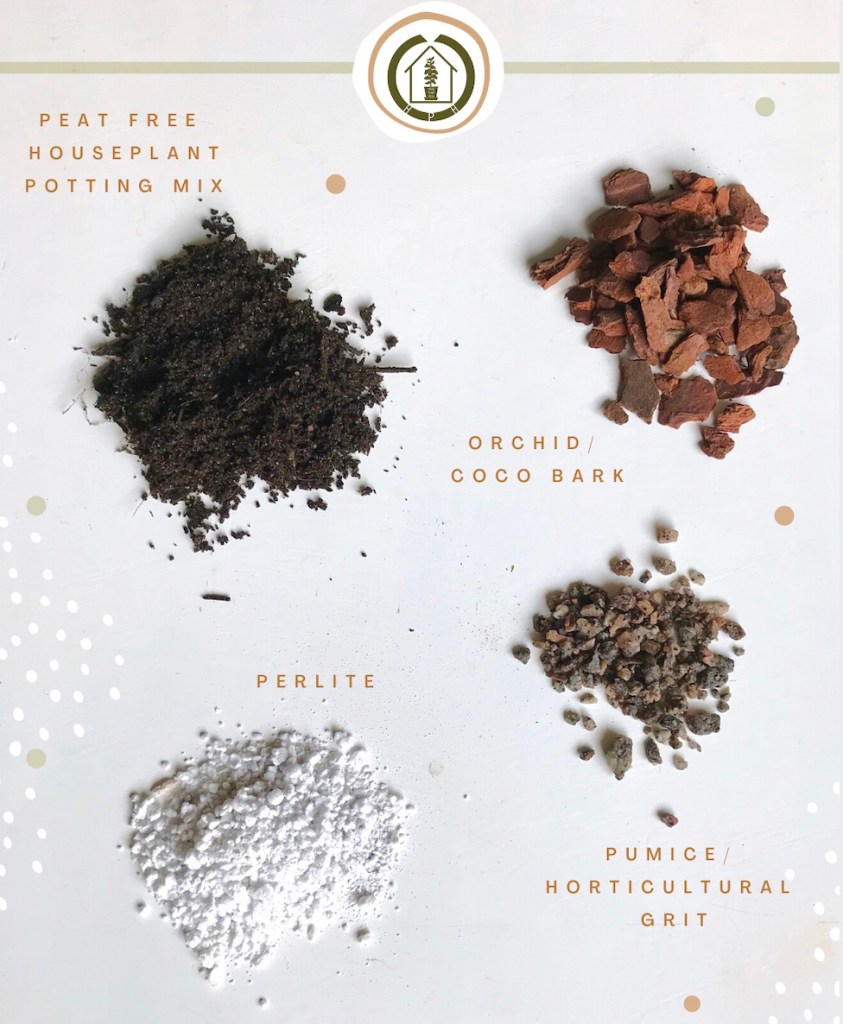
Peru enjoys moisture but needs strong aeration to prevent root issues.
Recommended Soil Mix
– 40% coco coir
– 30% chunky orchid or pine bark
– 20% perlite or pumice
– 10% horticultural charcoal
This provides:
– Fast drainage
– Excellent oxygen flow
– Long-term soil structure
– Reduced risk of rot
Avoid dense or peat-heavy mixes.
Climbing Support (Highly Recommended)
Monstera Peru transforms when given vertical support.
Best Supports
– Moss pole
– Coco pole
– Wooden plank
– Trellis
Benefits of Climbing
– Larger leaves
– Deeper, richer colour
– Faster growth rates
– Stronger root attachment
– More compact internodes
A Peru on a sturdy pole looks dramatically different from one allowed to sprawl.
Fertilising
Peru grows moderately fast, especially under good light, and appreciates regular feeding.
Use
– Balanced liquid fertiliser every 3–4 weeks in spring/summer
– Half-strength feeding is ideal
Avoid
– Overfeeding (causes leaf burn or salt buildup)
– Fertilising during winter dormancy
Flush soil occasionally to keep nutrients balanced.
Repotting
Monstera Peru prefers to be slightly root-bound but grows best when given fresh soil periodically.
Repot When:
– Roots circle the bottom of the pot
– Soil compacts or drains poorly
– Growth slows despite good conditions
Tips
– Move up only one pot size
– Repot during warmer months
– Maintain a similar soil structure
Peru typically needs repotting every 12–18 months.
Common Issues & How to Solve Them
Although hardy, Peru may show stress under extreme conditions.
Yellow Leaves
– Usually overwatering
– Improve drainage, lighten soil
– Increase light slightly
Drooping Leaves
– Mild underwatering
– Heavy soil retaining too much moisture
– Sudden temperature changes
Brown Edges
– Low humidity (rare)
– Over-fertilisation
Small New Leaves
– Not enough light
– No climbing support
Pest Sensitivity
Generally low, but may attract thrips in very dry environments.
Wipe leaves regularly to prevent buildup.
Why Collectors Love Monstera Peru
Collectors consistently choose Peru because:
– It’s easy but looks exotic
– The texture is unmatched among common Monsteras
– It grows reliably indoors
– It handles inconsistent care
– It climbs beautifully
– It remains compact and manageable
– It thrives without needing a greenhouse setup
It's a rare plant that feels accessible—making it perfect for beginners entering the world of textured foliage.
Final Thoughts
Monstera Peru brings together beauty, resilience, and simplicity. With its embossed leaves, steady growth, and adaptability to typical household conditions, it’s one of the most rewarding species for both new plant parents and advanced collectors.