
Watering is the single most misunderstood part of indoor plant care—especially when it comes to rare and sensitive species. Most issues that appear as “mystery decline” in Philodendrons, Alocasias, Anthuriums, and Syngoniums aren’t about humidity or fertilizer at all.
They almost always come back to one thing: water balance.
The tricky part?
Over-watering and under-watering can look almost identical if you don’t know what to look for.
This guide breaks down how to accurately diagnose each problem, how to fix it, and how to prevent watering mistakes in the future.
What Actually Counts as Over-watering?
Most people think over-watering simply means “watering too often.”
In reality, over-watering means the roots are sitting in conditions too wet for too long, leading to low oxygen, anaerobic bacteria, and eventually rot.
Over-watering is caused by:
– Soil that holds too much moisture
– Pots without drainage
– Watering before the soil has begun drying
– Keeping plants in dark conditions (slows evaporation)
– Using a pot that’s too large for the root system
Over-watering is not just about frequency—it’s about water + environment + soil structure.
What Counts as Under-watering?
Under-watering happens when a plant isn’t receiving enough moisture to support its metabolic processes. For rare aroids, this can quickly stunt growth or trigger leaf drop.
Under-watering is caused by:
– Letting soil dry out completely and repeatedly
– Soil that repels water (hydrophobic mix)
– Pots that are too small and dry extremely quickly
– Strong airflow or heat sources
– Intense light without increased watering frequency
Under-watering also stresses roots—but through dehydration instead of suffocation.
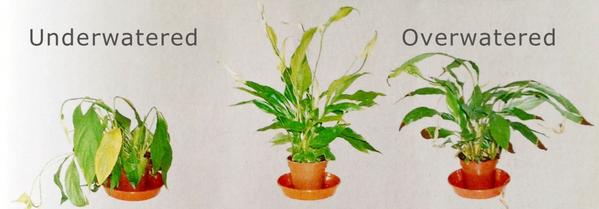
How to Tell the Difference: Over-watered vs. Under-watered Symptoms


This is where most collectors get confused:
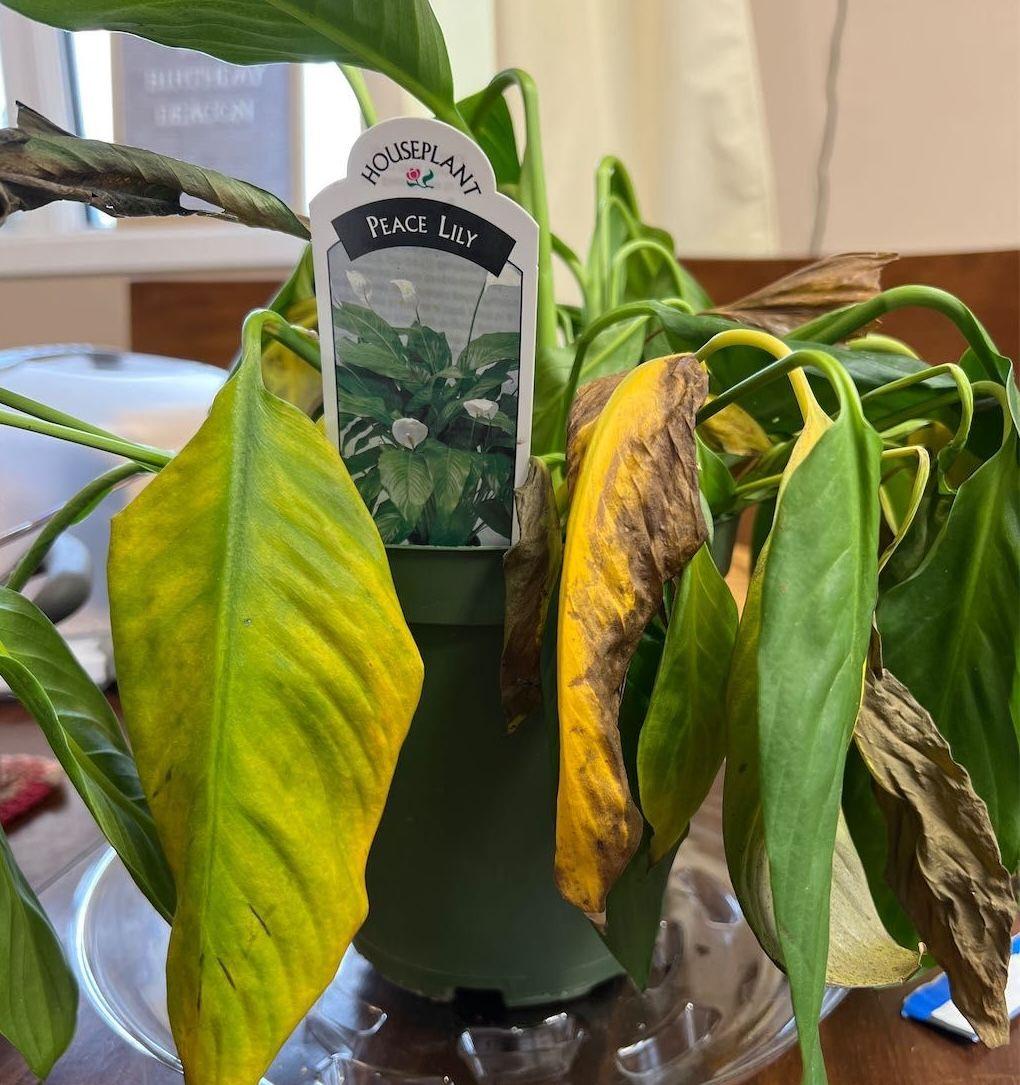
Both issues cause drooping, yellowing, curling, and slowed growth.
But the specifics tell the story.
Signs of Over-watering
1. Leaves yellow evenly from the bottom upward
Lower leaves drop first because the roots supplying them are compromised.
2. Leaves feel soft, limp, or mushy
Softness = waterlogged cells.
3. Soil stays wet for more than 5–7 days
This is the most reliable indicator.
4. Sour or swampy smell when watering
Rot has likely begun.
5. New growth emerges small, deformed, or fails to unfurl
Oxygen-poor roots can’t support healthy development.
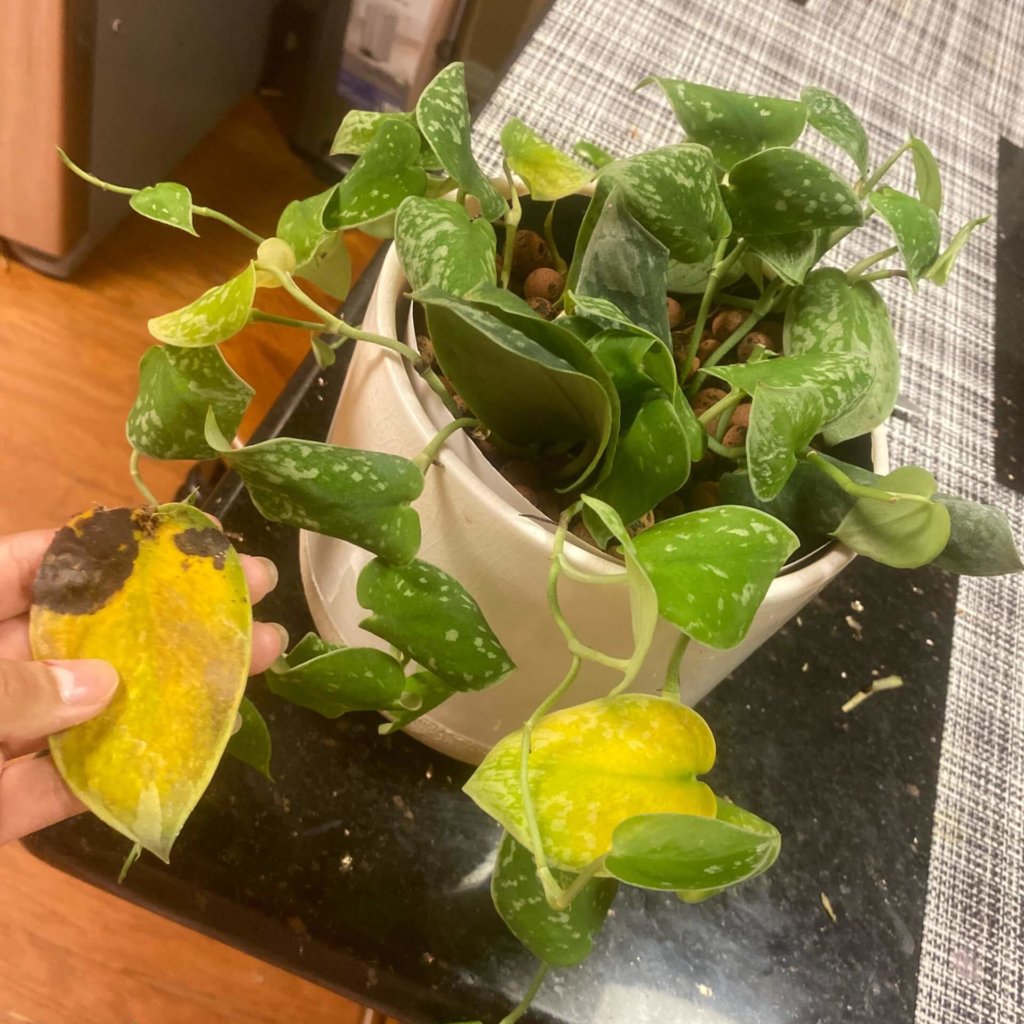
6. Brown or black spots with a yellow halo
Classic sign of bacterial involvement.
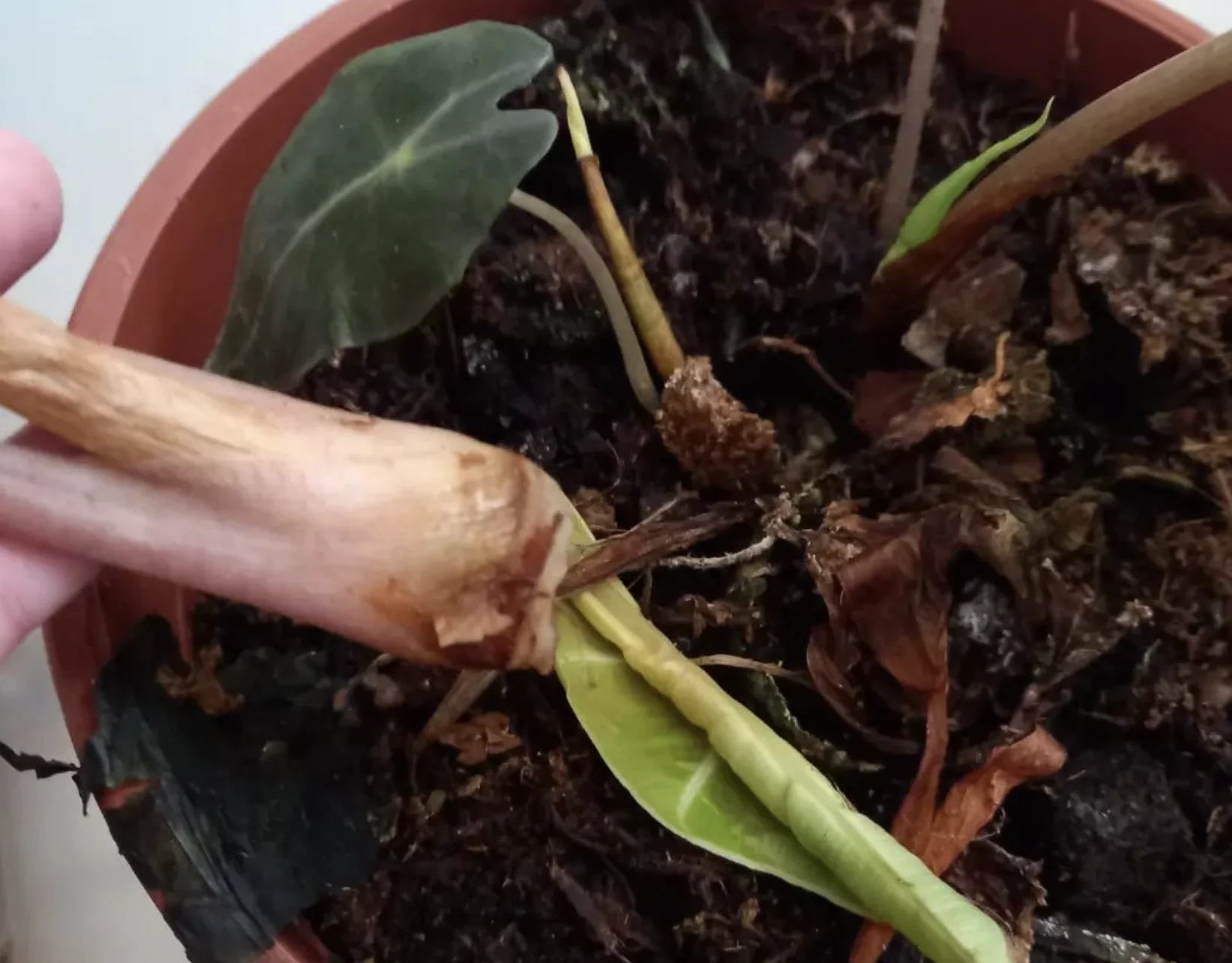
7. Rhizome or corm feels soft
In Alocasia, this is diagnostic: firm = healthy; soft = rot.
Signs of Under-watering
1. Leaves curl, fold, or crisp at the edges
The plant is conserving moisture.
2. Leaves feel thin or papery instead of plush
Dehydration reduces turgor pressure.
3. Soil pulls away from the sides of the pot
Hydrophobic soil is a top-tier cause of chronic under-watering.
4. Water runs straight through and doesn’t absorb
The mix is too dry to retain moisture.
5. Growth stalls or leaves emerge smaller
The plant doesn’t have enough moisture to support new growth.
6. Sudden, dramatic drooping that improves after watering
Rapid recovery is typical for mild under-watering—not for over-watering.
Visual Quick Guide
Over-watered plants
– Soft, limp leaves
– Yellowing starts at the bottom
– Soil constantly wet
– Rot smell
– Mushy stems or corms
Under-watered plants
– Crispy edges
– Leaf curl
– Soil bone-dry or shrinking
– Rapid bounce-back after watering
– Thin, papery leaves
Use these as your first diagnostic layer—then check soil moisture to confirm.
Why Rare Plants React More Dramatically

Rare aroids come from environments with:
– Loose, airy substrates
– Constant moisture but not saturation
– High oxygen at the roots
Standard “potting mixes” often fail them because they retain too much water or dry too quickly. Add inconsistent watering habits, and issues compound fast.
Alocasias in particular store moisture in their corms, meaning:
– They tolerate slight dryness
– They collapse quickly if roots suffocate
– They rot easily if soil is dense
Understanding this helps prevent misdiagnosis.
How to Fix Over-watering (Step-by-Step)
1. Stop watering immediately
Let the soil dry to at least halfway down the pot.
2. Check soil aeration
If the mix is muddy, compact, or smells sour, repotting is required.
3. Inspect the roots
– Firm white roots = healthy
– Brown, black, mushy roots = rot
Trim damaged roots using sterilised scissors.
4. Repot into a fresh, airy mix
Use something like the PDA recommended mix:
– 40% chunky aroid mix
– 30% coco coir
– 20% perlite/pumice
– 10% pine bark / horticultural charcoal
5. Reduce pot size if the plant is over-potted
A too-large pot stays wet far too long.
6. Increase airflow around the pot
More oxygen = faster recovery.
7. Water lightly after repotting
Never drench immediately unless the roots were completely dry.
How to Fix Under-watering (Step-by-Step)
1. Rehydrate the soil slowly
Pour water in small amounts to saturate evenly.
2. Bottom-water for 10–20 minutes
This helps revive hydrophobic soil.
3. Trim any crisped brown areas
They won’t recover but removing them improves plant energy allocation.
4. Increase watering frequency slightly
Don’t overcorrect; adjust gradually.
5. Improve the substrate if it dries too fast
Add:
– More coco coir
– Slightly more compost
– Less perlite/pumice
6. Check environmental factors
Move away from:
– Direct heaters
– Strong airflow
– Intense sun
7. Give a light feed once the plant recovers
Dehydrated plants cannot absorb nutrients, so wait until turgor returns.
The “Finger-Depth Test” (Avoids 90% of Over-Watering Issues)
Insert your finger 4–5 cm into the soil:
– If the top feels dry but underneath feels cool/damp → wait
– If both top and mid-layer feel dry → water
– If soil feels wet, sticky, or cold → do not water
This test alone prevents most root rot incidents—especially in Alocasias and slow-growing Philodendrons.
The Weight Test (The Most Accurate Method for Collectors)
Pick up the pot before and after watering to learn its “full” and “empty” weights.
Over time, you’ll know precisely when to water based on pot weight alone.
This is especially reliable for:
– Heavy ceramic pots
– Deep nursery pots
– Plants with dense root systems
Collectors swear by this method because it removes guesswork entirely.
Advanced: When Symptoms Overlap
Some situations are legitimately tricky:
Drooping but the soil is still moist
→ Likely over-watering or low oxygen.
Yellowing but soil dries quickly
→ Under-watering or inconsistent watering cycles.
Crisping + yellowing at once
→ Under-watering + low humidity together.
Sudden collapse
→ Over-watering in 70% of cases, root rot in progress.
If you are unsure:
– Evaluate soil moisture
– Inspect roots if needed
– Compare symptoms to your plant’s species tendencies
Certain genera tell a clearer story:
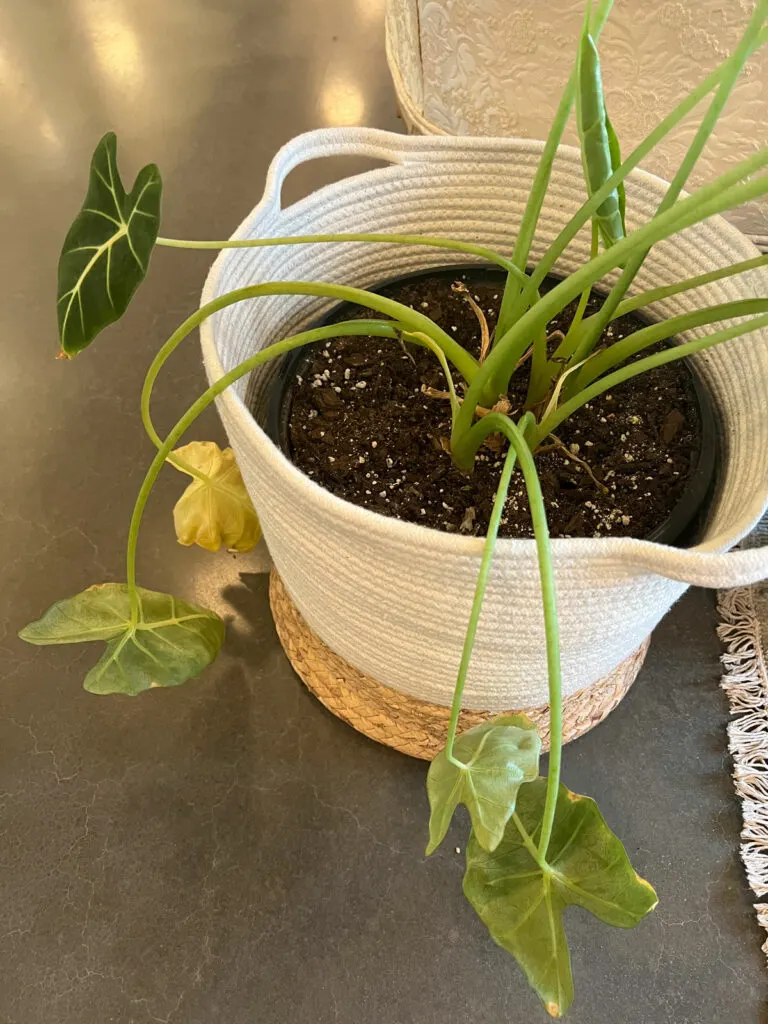
Alocasia: Soft corm = over-watering.
Philodendron: Yellowing bottom leaves = over-watering.
Syngonium: Crispy tips = under-watering.
Anthurium: Drooping but firm leaves = under-watering; floppy leaves = over-watering.
How to Water Rare Plants Properly (The PDA Method)

Our recommended framework keeps things simple and avoids both extremes.
1. Water deeply but infrequently
Rare plants prefer:
– A thorough soak
– Followed by a drying phase
– Never constant dampness
This mimics their natural rainforest conditions.
2. Match watering to light levels
Bright light = more water
Low light = less water
A plant in a dim corner may only need watering every 10–14 days.
3. Use proper substrates
Watering mistakes become serious only when soil structure is wrong.
Airy substrates forgive more errors.
4. Prioritise oxygen at the roots
More airflow → fewer over-watering problems.
5. Use the same pot type consistently
Switching between ceramic, plastic, or terracotta alters drying speed.
Consistency improves intuition.
Final Thoughts: Watering Is a Skill, Not a Guess
The more rare plants you grow, the easier watering becomes—not because the plants get simpler, but because you get better at reading them.
Remember:
– Over-watering suffocates roots.
– Under-watering starves roots.
– Balanced watering supports long-term growth, stability, and stunning foliage.