


Velvet-leaf aroids are some of the most prized plants in the rare-plant world. Their matte, light-catching texture absorbs and reflects light in a way that makes each leaf look like a living art piece.
But these same velvet leaves—found in species like Philodendron Melanochrysum, Philodendron Verrucosum, Anthurium Crystallinum, Anthurium Clarinervium, and many jewel Alocasias—also make these plants more sensitive to incorrect light levels.
Too much light burns them.
Too little light stalls them.
The right light makes them grow faster, produce larger leaves, and maintain rich velvet depth.
This guide breaks down exactly what “bright indirect light” means, how to achieve it, how different velvet aroids respond to light, and how to read their signals. With the right light setup, velvet aroids become dramatically easier—and grow far more beautifully.
Why Velvet Aroids Have Special Light Needs
Velvet leaves are covered in microscopic hairs called trichomes, which:
– Scatter incoming light
– Protect the leaf from UV damage
– Reduce moisture loss
– Create the velvet appearance we love
These adaptations evolved in understory environments where filtered light passes through layers of canopy. As a result:
– They can burn easily in strong direct sun
– They grow quickly in diffused brightness
– They colour most richly under moderate, consistent light
– They react dramatically when light levels change
Understanding this natural habitat is key to providing ideal indoor lighting.
What “Bright Indirect Light” Actually Means
Most sources use this term without explaining it. For velvet aroids, bright indirect light means:
– A room that is bright enough to read comfortably all day
– No harsh sun touching the leaves
– A soft, diffused light source within 1–3 metres of a window
– Enough brightness to cast a faint, soft shadow
– A PPFD (photosynthetic light level) of roughly 50–150 µmol/m²/s
In practical terms:
– Next to an east-facing window = perfect
– A few metres back from a north-facing window (in the Southern Hemisphere) = great
– Slightly filtered light from a sheer curtain = optimal
– Direct afternoon sun = damaging
Velvet leaves want glow, not glare.
Best Window Types for Velvet Aroids


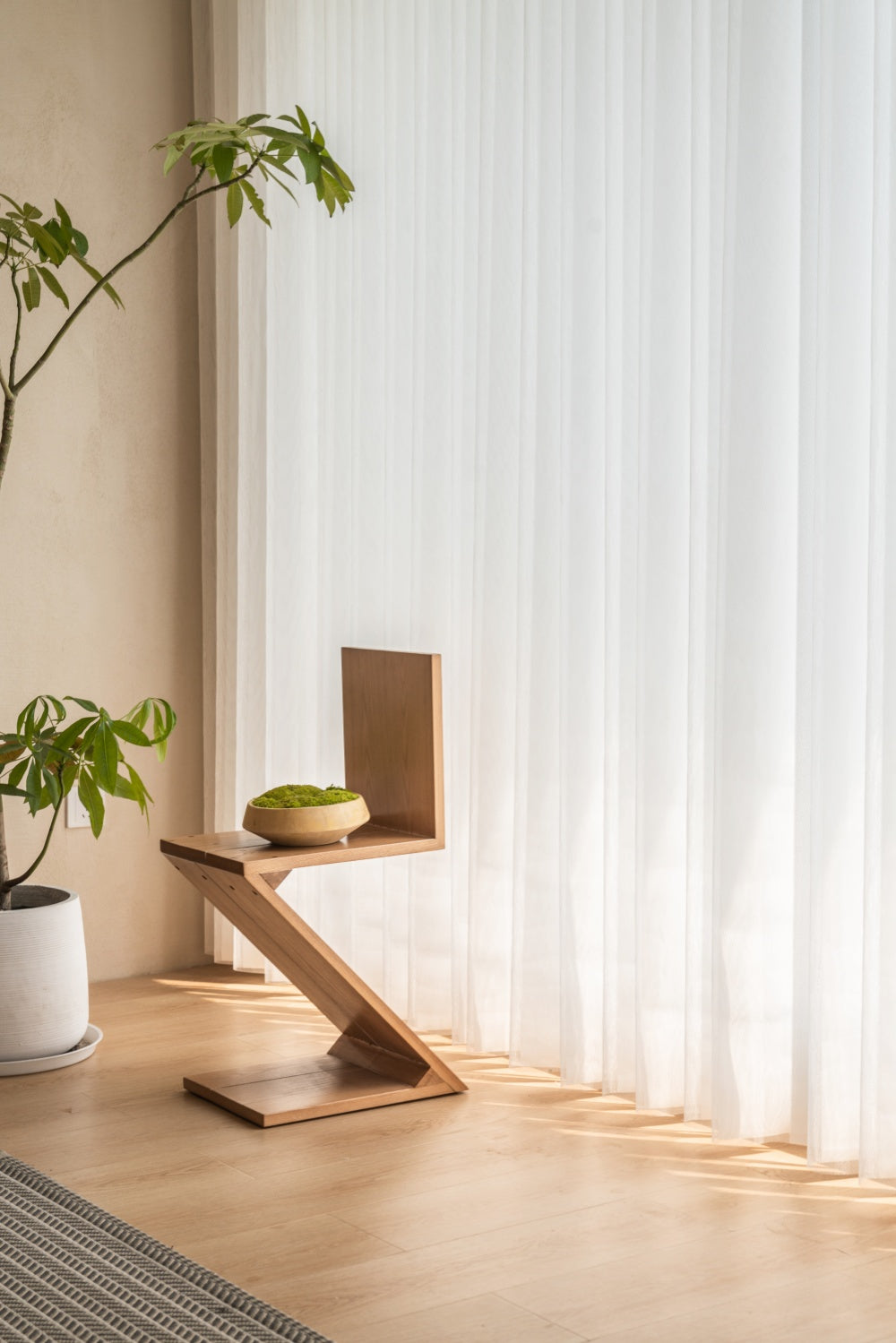
Australia’s hemispheric position matters, so here is the breakdown relevant to QLD, NSW, VIC, and WA growers.
East-Facing Windows (Highly Recommended)
Morning sun is gentle and low-intensity.
– Ideal for Melanochrysum, Clarinervium, Crystallinum
– Provide enough brightness without risk of burn
– Great for long-term growth and large leaves
Place your plant 1–2 metres away for best results.
North-Facing Windows (Best for Growth in Australia)
Northern light offers consistent, all-day brightness.
– Excellent for rapid foliage expansion
– Allows velvet aroids to produce larger, thicker leaves
– Works especially well for juvenile plants
To prevent overheating:
– Use a sheer curtain
– Move the plant slightly off to the side
– Keep 1–3 metres away depending on intensity
South-Facing Windows (Low Light)
This is where many velvet aroid issues begin.
– Light may be too dim
– Leaves may darken but growth slows
– Plants may stretch toward the window
If this is your only option, use supplemental grow lighting.
West-Facing Windows (Risk of Burning)
Harsh afternoon sun is too strong for velvet leaves.
– Use curtains or blinds
– Keep plants further back
– Avoid placing directly in sun paths
Even 20 minutes of harsh, late-afternoon sun can scorch a soft velvet leaf.
Grow Lights for Velvet Aroids: Do You Need One?
Grow lights are incredibly beneficial for collectors because they provide:
– Consistent brightness year-round
– Strong light without heat
– Predictable growth patterns
– Faster recovery from shipping or repotting
Velvet aroids thrive under lights when positioned correctly.
Ideal Grow Light Intensity
Velvet aroids prefer low–medium PPFD, roughly:
– 70–120 µmol/m²/s for Anthuriums
– 80–150 µmol/m²/s for Philodendrons
– 50–100 µmol/m²/s for most jewel Alocasias
This is much lower than what cacti or full-sun plants require.
Distance from Grow Lights
Different light types require different spacing.
LED Panels
– 40–60 cm above canopy
LED Bulbs
– 20–30 cm above canopy
Strip Lights
– 10–20 cm above canopy
The velvet surface heats quickly—so always prioritise distance over intensity.
Daily Light Duration (Photoperiod)
Velvet aroids perform best with:
– 10–12 hours of light
– A stable schedule (smart timers help)
More light time ≠ more growth.
Excess duration can cause stress, thinning leaves, or colour loss.
How Much Light Different Velvet Aroids Need
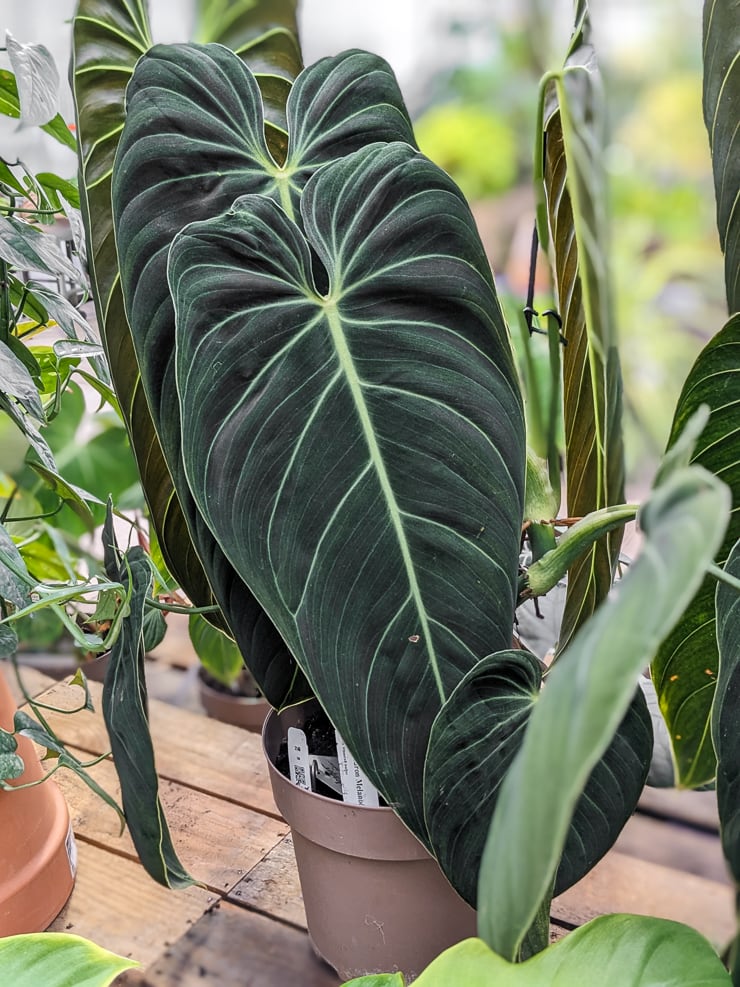
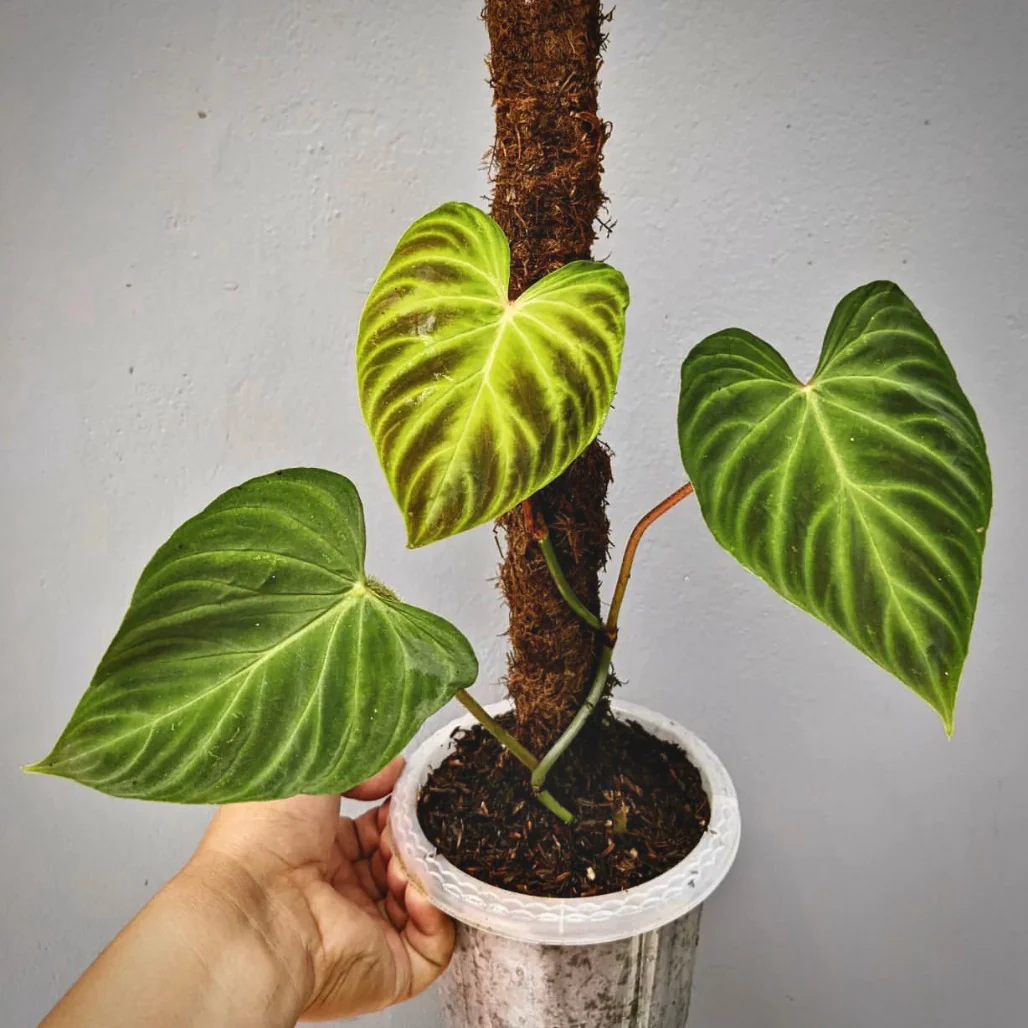
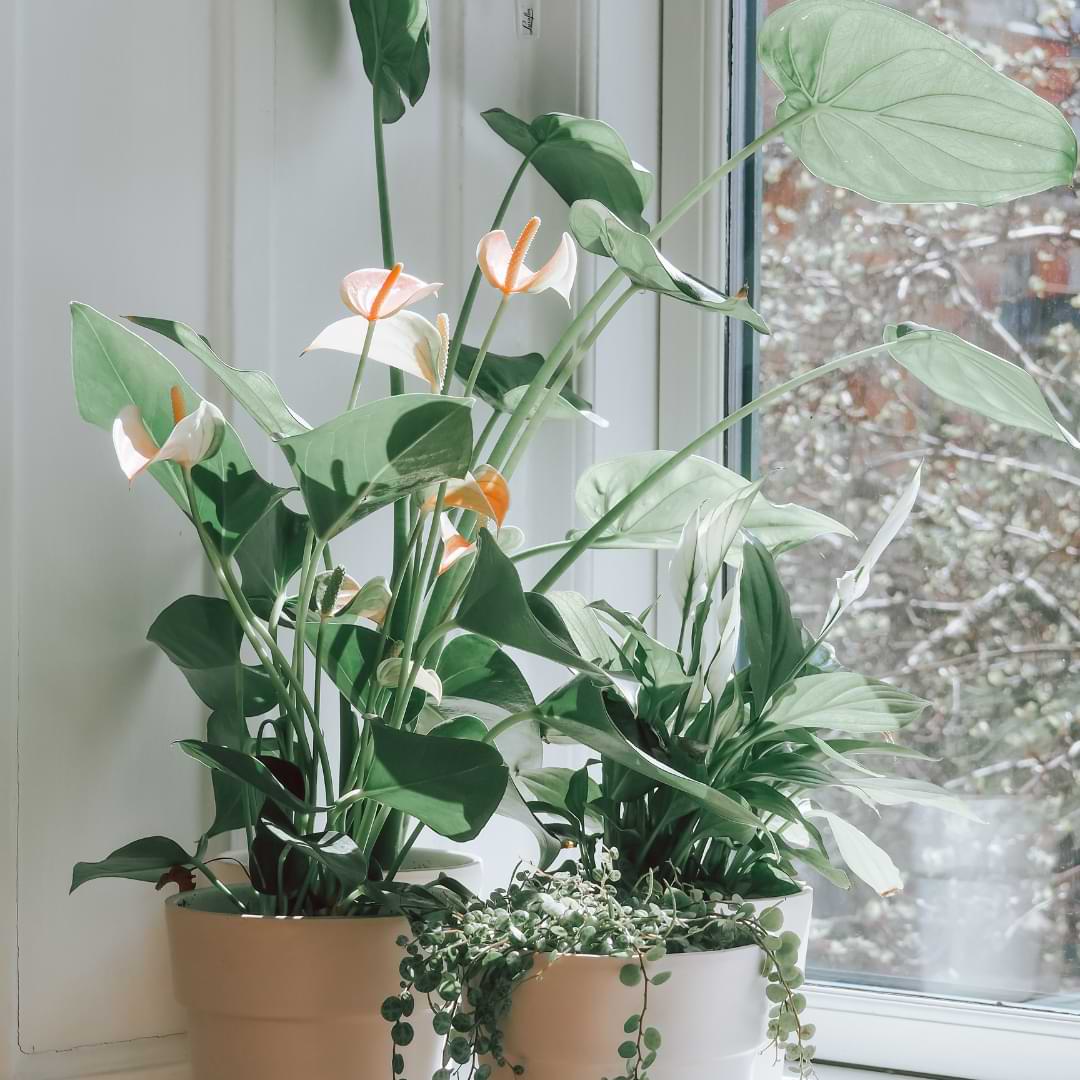
Each plant has slightly different preferences based on its origin.
Philodendron Melanochrysum
– Prefers bright, filtered light
– Leaves elongate beautifully under stable brightness
– Avoid direct sun—burns easily
Optimal placement:
– 1–2 metres from a north-facing window in AU
– Under LED lights at 80–120 µmol/m²/s
Philodendron Verrucosum
More sensitive than Melanochrysum.
– Likes bright but cooler light
– Hates hot environments
– Prefers humidity + filtered light combo
Place further from windows compared to other Philodendrons.
Anthurium Crystallinum
A classic velvet species.
– Loves steady brightness
– Doesn’t tolerate dark corners
– Leaf size increases with consistent light
Great under grow lights.
Anthurium Clarinervium
A little tougher than Crystallinum.
– Prefers medium–bright light
– Beautiful veining becomes more pronounced in correct light
– Can tolerate slightly lower light levels
Avoid strong direct sun.
Alocasia Frydek & Other Jewel Alocasias
Not as light-hungry as Philodendrons.
– Prefer moderate light
– Too much light causes yellowing or fading
– Too little light causes drooping
East-facing windows are ideal.
How to Read Light Symptoms in Velvet Aroids
This section is critical—velvet plants show very clear signs when light levels are not right.
Symptoms of Too Much Light (Light Stress / Burn)

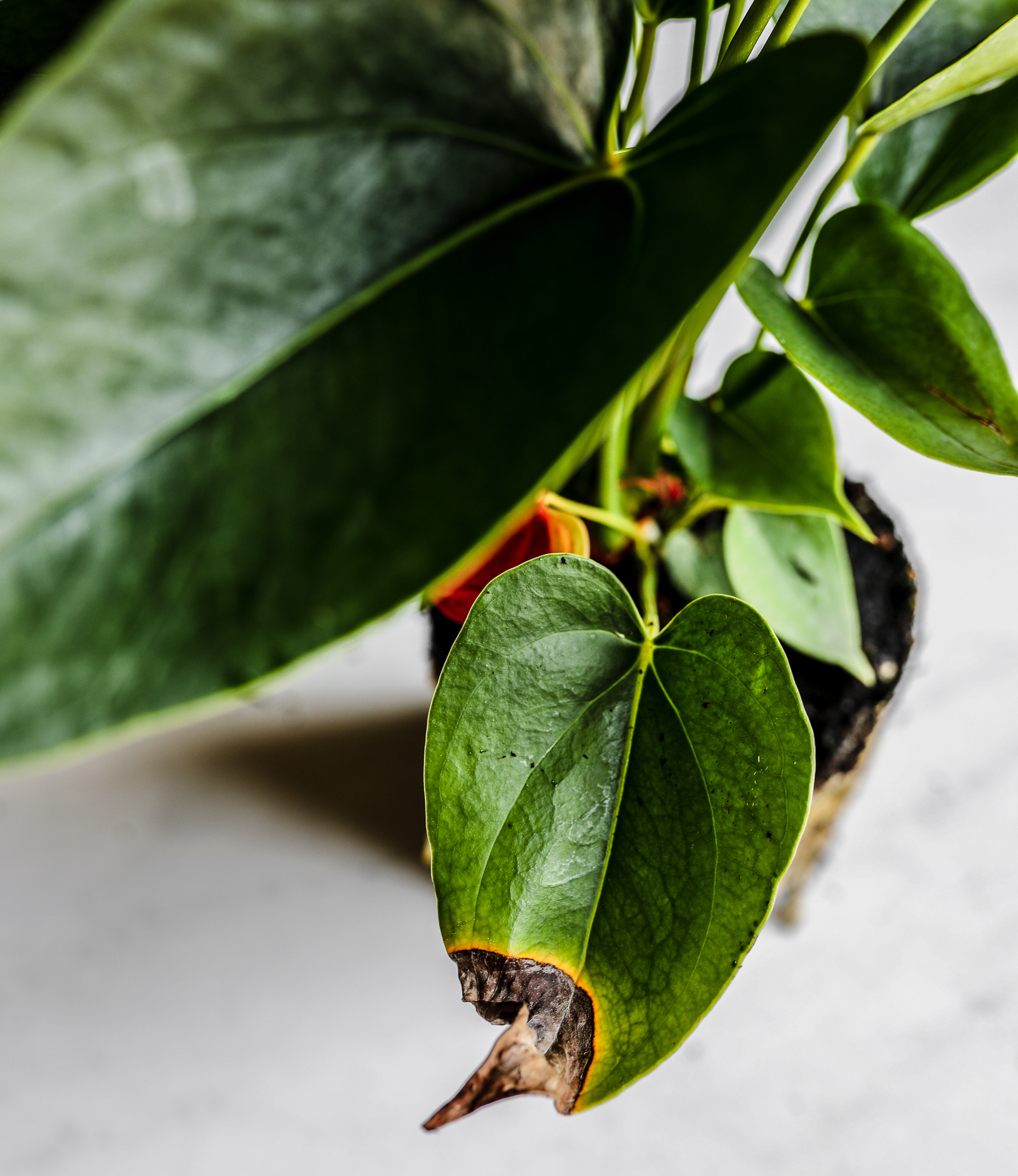
– Fading or washing out of velvet texture
– Yellow patches or bronzing
– Crispy edges or spots
– Leaves curling downward (“taco-ing”)
– Slowed growth despite bright conditions
– New leaves emerging smaller
Burn happens fast—especially in summer.
Symptoms of Too Little Light
– Deepening dark colour but no new growth
– Long internodes (stretching)
– Leaves facing the window
– Reduced leaf size
– Slowed root development
– Wet soil that never dries (leading to rot)
Low light is one of the top causes of decline in Anthuriums and Melanochrysums.
How to Fix Lighting Issues Quickly
If your plant is receiving too much light:
– Move 1–2 metres back from window
– Add a sheer curtain
– Reduce grow light intensity or distance
– Shorten grow light duration
If your plant is receiving too little light:
– Move closer to a window
– Remove obstructions (shelves, curtains, walls)
– Add a grow light
– Clean windows and leaves (dust reduces brightness)
Light adjustments take 2–3 weeks before growth noticeably improves.
The Ideal Light Setup for Velvet Aroids (PDA Method)


Here is an easy formula that ensures velvet aroids stay healthy, colourful, and growing.
1. Soft Morning Light + Bright Filtered Light All Day
– East-facing sun
– North-facing brightness
– No direct afternoon rays
2. 40–150 µmol/m²/s Light Range
This is the safest intensity for all velvet aroids.
3. 10–12 Hours of Stable Daily Light
Use timers to avoid inconsistency.
4. Keep Plants 1–3 Metres From Windows
Closer is not always better.
5. Avoid Sudden Light Changes
Velvet leaves harden off to their current light level.
A sudden shift causes shock.
When upgrading your lighting:
– Increase brightness gradually over 7–10 days
Seasonal Light Adjustments
Light intensity changes throughout the year.
Summer
– Light is stronger
– Sun path shifts higher
– Increase distance from windows
– Add curtains to soften harsh rays
Winter
– Light is weaker
– Sun path is lower
– Move plants closer to windows
– Use supplemental lighting for consistency
Consistency is more important than intensity.
Common Myths About Velvet Aroid Light Requirements
Myth 1 — “Velvet leaves need shade.”
They need filtered light, not darkness.
Myth 2 — “They burn easily, so keep them far from windows.”
They burn from direct sun, not distance.
Myth 3 — “Grow lights are too strong for velvet species.”
Incorrect distance is the issue—not the light itself.
Myth 4 — “Deep colour = perfect lighting.”
Dark leaves often mean insufficient brightness.
Final Thoughts: Light Creates the Velvet Effect
Velvet aroids reveal their full beauty only when their lighting is correct:
– Larger leaves
– Better colour
– Stronger venation
– Softer texture
– Faster growth
– Fewer pests and rot issues
Light is the one factor that transforms a nice velvet aroid into a showpiece.